



















Craig Gibbons was diagnosed with Lyme illness in 2021. His doctor recommended antibiotics, but they did not relieve one of his most incapacitating symptoms: a persistent brain fog that made it difficult for him to focus or recall facts.
So he tried something new: at-home brain stimulation.
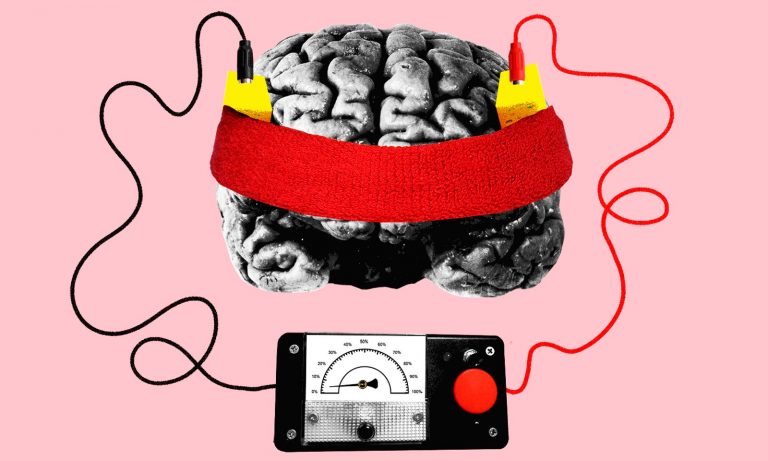
Gibbons had been experimenting with transcranial direct current stimulation, or tDCS, which administers mild electrical currents to the brain via electrodes attached to the head, for several years.
Brain stimulation comes in many different forms, but they are all centered on the same idea: sending tiny zaps to specific parts of the brain to alter its activity. Some of its uses are well-established: transcranial magnetic stimulation is used in hospitals and clinics as a way to treat depression. Another version, deep brain stimulation, involves surgically implanting electrodes in the brain, and has been used for years to ease symptoms of Parkinson's disease.
Gibbons, 32, of New York City, had heard it could be used to alleviate symptoms of brain fog.
"It helped wake me up and get things moving," he added.
The majority of brain stimulation treatments require the placement of electrodes — conductors through which electricity travels — on specific areas of a person's head. These electrodes transmit tiny electrical impulses to the brain through the skull.
Brain stimulation is primarily used for medical purposes at hospitals or doctors' offices. However, the usage of at-home brain stimulation devices is growing among a group of enthusiasts who claim it improves their mental state and gives them an advantage, such as on an upcoming exam or a work project. Others attribute it to achieving deeper meditation states or mental clarity.
The at-home devices are accessible online and typically range in price from $40 to $500. They are typically no larger than a television remote or a smartphone; batteries, head caps and straps, saline, and other accoutrements required to provide mild electrical pulses to the brain are sometimes supplied separately.
Many of them are sold as having FDA clearance, which requires a less rigorous review process than what is required for FDA approval.
Despite their growing popularity, many experts oppose their use at home because little is known about their long-term safety, according to Boston University neuroscientist Robert Reinhart.
“We are talking about injecting electricity into someone’s brain. Someone could get hurt,” he said. “We need to better understand what these tools can do including any unintended consequences they may have.”
[zombify_post]

0 Comments