



















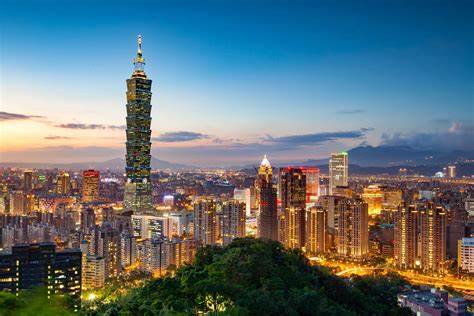
Taiwan has a lot to be proud of if free and fair national elections are what distinguishes a democracy.
The self-governing island conducted its eighth presidential election in January with a parliamentary vote.
The Communist Party of China (CPC), which has ruled China since 1949, is only 160 kilometers (100 miles) away on the other side of the narrow Taiwan Strait. Although the CPC frequently asserts that it is in charge of a democratic state, Taiwan's electoral system is not similar.
China's political system, in which the "people are the masters," but the party-state apparatus manages the people's affairs on their behalf, is referred to as "whole-process people's democracy" by President Xi Jinping.
Shanghai-born businessman Ken Cai*, 35, disagrees with Xi's interpretation of democracy
 Ken said Al Jazeera, "The truth is that the people of mainland China have never been allowed to pick their own leaders.""That is nothing more than misinformation."
Ken's critical analysis contrasts sharply with the CPC's frequently made claim that the majority of Chinese people find their one-party rule to be satisfactory.
President Xi has stated for a long time that China is developing along a unique path guided by its own kind of government. Furthermore, Chinese officials have claimed that criticism of Beijing's record on democracy and human rights stems from a misperception of China and the Chinese people.
The fact that Taiwan has successfully hosted multiparty elections refutes Beijing's claim that liberal democracy and Chinese culture are incompatible.
Taiwan's free democratic system is in conflict with Xi's vision of a revitalized China firmly under CPC rule, and of Taiwan eventually unifying with the Chinese mainland.
According to Chong Ja Ian, an associate professor of China's foreign policy at the National University of Singapore, "the Taiwanese experience is a clear affront to the CPC narrative."
According to Yaqiu Wang, research director for China, Hong Kong, and Taiwan at the US-based advocacy group Freedom House, Taiwanese elections are far more sensitive for Beijing than elections in other democracies because people in mainland China may be more directly inspired by Taipei's democratic example."It can cause particular frustration with your own non-elected leaders when you see people from your own in-group having democracy and being able to elect their leaders," Wang added.
She continued, "That makes Taiwanese elections a threat to the CPC."
China is stifling the elections in Taiwan
Perhaps unsurprisingly, the Chinese government did not congratulate Taiwan on the good outcome of its elections, in contrast to leaders from nations like Japan, the Philippines, and the US.
Since the election of Tsai Ing-wen as president in 2016, ties between China and Taiwan have deteriorated rapidly.
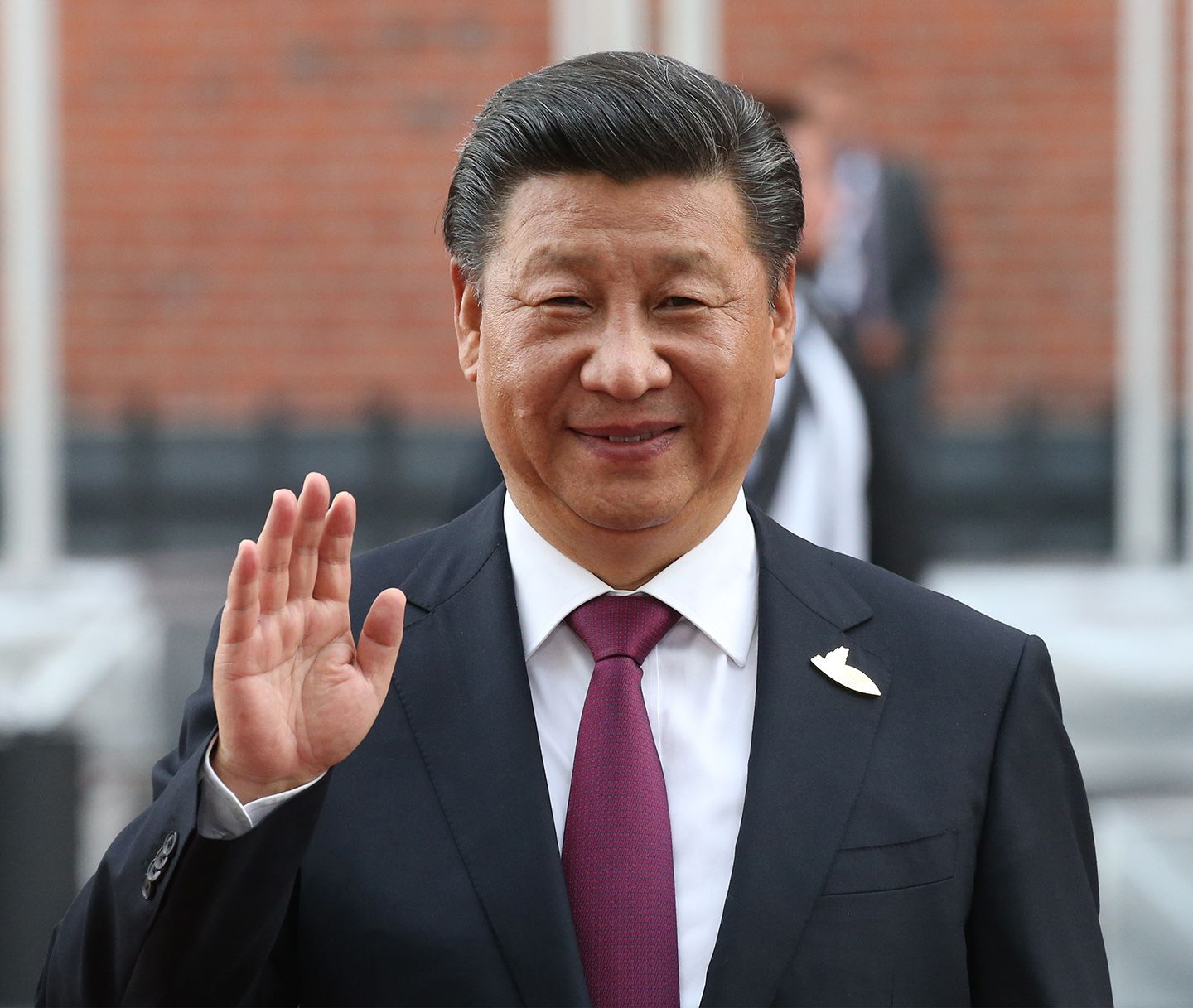
The CPC does not rule out using force in its future efforts to unite Taiwan with China. Tsai, her replacement President-elect William Lai Ching-te, and other Democratic Progressive Party (DPP) members are seen as foreign-backed separatists.
In response to the election results, Chen Binhua, a spokesman for Beijing's Taiwan Affairs Office (TAO), stated that the outcome “will not impede the inevitable trend of China's reunification” and that Lai's 40% vote share and the DPP's loss of its parliamentary majority demonstrated that the party “cannot represent mainstream public opinion on the island”.
Many Chinese social media users responded to Chen's remarks by highlighting Beijing's own democratic credentials.
On the Weibo social media network, a person posted, "Enough, already-how can you criticize others' elections when you don't even allow elections at home?"
"So the general public's viewpoint isn't represented by elections? What kind of fresh insight is this? read a different response, and a third one outright criticized Beijing's Taiwan Affairs Office: "The most blatant, pointless, piece of garbage of a government agency is the TAO."
Since then, censors have deleted all three of the comments.
When weighed against the flaws in China's political system, 31-year-old translator Ailene Long* of Shenzhen, China, told Al Jazeera that she thought criticism of Taiwan's election was absurd."It is impossible to inquire about Taiwanese public opinion when individuals in China have always been restricted to selecting the Communist Party," Ailene remarked.
After the results of the Taiwanese election were announced, Wang of Freedom House noticed that many identical Chinese reactions were appearing on Chinese social media channels.
"However, many of them were taken down fast—many of them vanished in a matter of minutes," she said to Al Jazeera.
The extensive censorship network of the Chinese government frequently blocked hashtags, comments, and news regarding the Taiwanese election from social media. On the day of Taiwan's election, there were indications that in addition to the strict restrictions, the Chinese government had attempted to stifle interest on Chinese social media by inflating other hashtags.
According to Wang, the authorities used such measures to suppress public criticism, but the underlying feeling of dissatisfaction with the Beijing leadership persisted.China's lack of democracy during difficult economic times
Shanghai resident Ken Cai believes that a large portion of the online discussion around Taiwan's election was essentially an outlet for people to express their displeasure with China.
He clarified, "A lot of people are struggling because of the economy, so they use this as an opportunity to vent their frustration with the government."
According to Ken, Taiwan's elections also highlight the differences between Beijing and Taipei.
Ken narrated how his grandparents had told him tales from Taiwan about crackdowns on Taiwanese citizens, and that they had once been terrified that Taiwan's Nationalists would attack China.
Following their defeat by the Communists in the Chinese Civil War, the Kuomintang (KMT), also referred to as the Chinese Nationalists, withdrew to Taiwan in 1949, where they initially had hopes of retaking mainland China. In order to strengthen their control over Taiwan, the KMT enforced martial law, suppressed civil rights, and apprehended those who disagreed with their leadership.
However, he added, "it appears that Taiwan has free elections, a strong economy, and positive relations with Western nations, while China has none of those things."
He felt that the COVID-19 pandemic in Shanghai in 2022, when the majority of the city was under heavy lockdown, highlighted China's democratic deficiency.
He declared, "The lockdown was worse than COVID."
"We suffered a great deal, but the government didn't seem to care about us or listen to us. Perhaps in a more democratic system, things would have been different."
The way the Chinese government handled the COVID-19 outbreak persuaded Ailene Long in Shenzhen that political change was necessary in China, and the most recent elections in Taiwan offered an alluring substitute.
When Ailene started her two-year university studies in Taiwan in 2013, she kept a careful eye on the elections there. It's getting harder for her to plan business visits and visit her friends in Taiwan these days due to the cold air blowing between Beijing and Taipei.
She was referring to Taiwan's major opposition party, the KMT, which has historically been more China-friendly than the DPP, when she added, "I was hoping that the opposition party would get elected this time so that things would get easier again."She respected the outcome of the election, although she was upset on election weekend when the DPP's Lai was declared the winner.
"And it's my belief that the Chinese government ought to embrace these kinds of elections as well, and maybe even be more receptive to holding them there," she added.
"Why can't we have free elections with multiple political parties if the Taiwanese can?"
Ailene also thinks that the CPC's assertion that the Chinese people are their own rulers and their legitimacy in China will be reinforced by democratic changes.
"That would demonstrate their seriousness about a democracy of the people."
* Due to the delicate nature of the subject, names were changed to honor their requests for confidentiality.
[zombify_post]

0 Comments