



















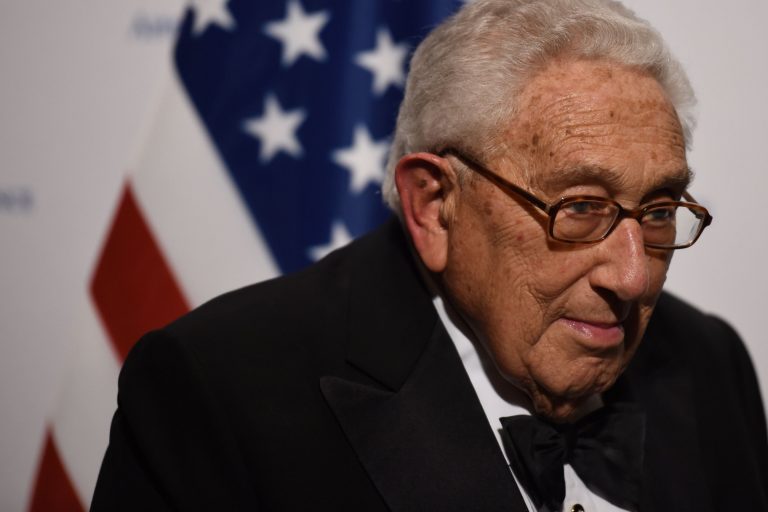
President Vladimir Putin, according to Henry Kissinger, misjudged the international environment and Russia's own capabilities when launching the invasion of Ukraine. According to the former secretary of state, he will have to halt the conflict when it essentially kills any hope of Russia remaining a great power in the future.Kissinger, who served in the Nixon and Ford administrations in the 1970s, said at a Financial Times event over the weekend that he fears the confrontation may escalate into a nuclear war.
Kissinger was a crucial figure in establishing American foreign policy during the Cold War, easing tensions between the US and Soviet Russia, as well as between the US and China, which culminated to President Nixon's historic visit to Beijing in 1972.
Kissinger told Edward Luce, the paper's U.S. national editor, at the FTWeekend Festival in Washington on Saturday how he split Moscow and Beijing by treating them differently. In the midst of European conflicts, Kissinger believes Washington should try to do the same again.
Former Secretary of State John Kerry advised against taking a "aggressive stance" against China and Russia, which could push them closer together. "At the very least, Russia will have to reevaluate its ties with Europe and its general attitude toward NATO following the Ukraine war," he said.
The war in Ukraine is now in its eleventh week, and Russia has yet to achieve any significant goals in the country. The Kremlin transferred Russian forces deployed in the districts surrounding Kyiv to southeast Ukraine in early April, with the new goal of "fully freeing" the Donbas region. As a result, the Ukrainian armed forces were able to reclaim control of a substantial portion of the country's north.On Monday, May 9, when Russia commemorated the Soviet Union's victory over Nazi Germany, Western intelligence and international watchers expected Putin to make a major declaration. Surprisingly, Putin did not declare all-out war on Ukraine or announce mass mobilization, which some believe is an indication that he is afraid of the Russian people's willingness to suffer.
It's difficult to say how the battle will conclude at this point. When asked about a possible ending, Kissinger told Luce that Russia would fight in Ukraine until the conflict consumed so much of its military capability and resources that the country risked losing its great power status.
"The obvious issue is how long will this escalation last, and how much room for additional escalation is there?" Kissinger explained. "Or has he reached the limit of his capability, and now he must decide when intensifying the war will strain his society to the point that it will be unable to conduct international policy as a great power in the future?"
Kissinger claimed he couldn't foresee if Russia would then use its nuclear arsenal to terminate the conflict at that point. He claimed that "we are now living in a completely different age" after the end of the Cold War.
In terms of preventing a nuclear calamity, which was Kissinger's goal during the Cold War, he remarked that circumstances have changed so drastically in recent decades that a new conversation about the potential consequences of nuclear weapons use is needed.
"As technology spreads over the world, as it necessarily does," Kissinger observed, "diplomacy and war will require new content, which will be a difficulty."
"I don't think we could just accept it," he said.
[zombify_post]

0 Comments