



















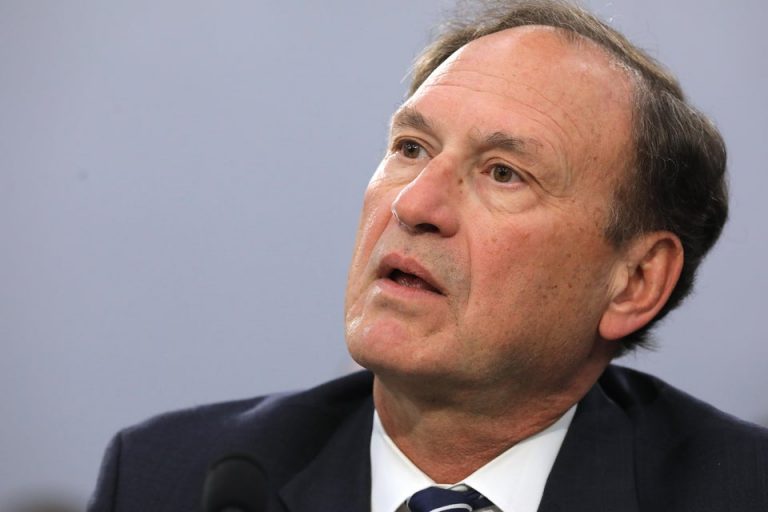
Justice Samuel Alito of the Supreme Court made light of the criticism that various world leaders had of the court's decision to overturn Roe v. Wade in June.Alito discussed a "narrowing" of religious speech in other countries' judicial rulings last week at the Notre Dame Law School's Religious Liberty Summit in Rome. When he was first composing his speech, he claimed he wasn't going to use any specific instances, but after hearing what other world leaders had to say about the court's ruling in Dobbs v. Jackson Women's Health Organization, which overturned the federal right to abortion, he thought again.
Since I had the privilege this term of writing what I believe to be the only Supreme Court decision in that institution's history that has been criticized by a number of foreign leaders who felt perfectly at ease commenting on American law, Alito said, "I've had a few second thoughts over the last few weeks."
He made light of the British Prime Minister Boris Johnson's plan to resign as prime minister once a replacement is appointed by saying that Johnson was one leader who made a joke, but he "paid the price."Johnson acknowledged that the decision was made outside of the United Kingdom's purview, but he nonetheless referred to it as a "backward step" for the United States.However, Alito said he was particularly "wounded" when the Duke of Sussex, Prince Harry, appeared to link the decision with Russia's invasion of Ukraine during a speech to the United Nations. Alito recalled criticism from French President Emmanuel Macron and Canadian Prime Minister Justin Trudeau.
Harry highlighted a "global assault on democracy and freedom" in a speech he gave last month, and he blamed the conflict in the Ukraine and "the rolling back of fundamental liberties" in the United States.
In a "increasingly secular society," Alito said he would refrain from discussing specific instances from other nations, but added that more was required to guarantee religious freedom than just "positive legislation."
The difficulty, according to him, is persuading people who do not identify with any religion or who see religion negatively that religious freedom is important to preserve.
[zombify_post]

0 Comments