



















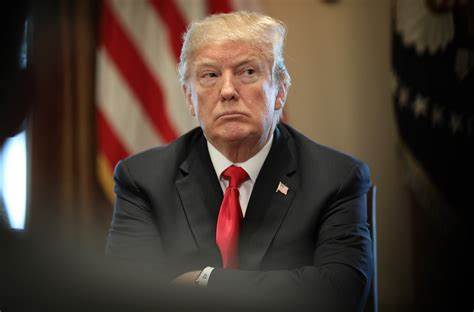
According to court documents made public when a federal judge unsealed the warrant authorizing the historic search this week, the FBI found documents marked "top secret" at the Florida residence of former President Donald Trump.
A property receipt revealed by the court on Friday reveals that during a search of the estate on Monday, FBI agents removed 11 sets of sensitive documents. Federal agents create the property receipt to detail what was taken during a search.According to the search warrant, the FBI raided Donald Trump's home in part due to allegations of breaking the US Espionage Act by improperly retaining secret defense documents.
Some of the records that were taken are classified and some are top secret. The documents and any potential information they might have included were not specifically described in the court records.
The highest classification for US government materials is "top secret." Making classified documents public or managing them improperly is against US law.On Friday, Trump asserted that the documents taken by authorities at his club in Florida were "all declassified" and contended that, if requested, he would have provided the Department of Justice with the documents.
"First off, everything was declassified. Second, there was nothing to "seize" or take. Without engaging in political gamesmanship and breaking into Mar-a-Lago, they could have gotten it whenever they wanted, Trump said on his Truth Social platform.
Although current presidents have the capacity to declassify information, this power expires when they leave office, and it was unclear whether the disputed documents had ever been declassified.Despite several demands from organizations, such as the National Archives, for the president's records to be turned over in compliance with federal law, Trump continued to keep the documents.
The search warrant and property receipt were released on Friday at the request of the Department of Justice by US Magistrate Judge Bruce Reinhart, the same judge who approved the search warrant that prompted the FBI search on Monday. Trump backed the "immediate" release of the warrant after Attorney General Merrick Garland said on Thursday that there was "strong public interest in this topic."The warrant and the property receipts were provided to Trump's attorneys on Monday, and they had the option to make them public at any time.
The proposal to make it public was not opposed, the Department of Justice informed the judge on Friday afternoon.
Trump stated on Truth Social that he would not resist the release of documents and that he would not stop it. By ENCOURAGING the immediate publication of those records, I take things a step further.The Department of Justice's request is noteworthy since such records typically remain confidential while an investigation is ongoing. However, the department seemed to realize that its silence following the search had left a space for Trump and his supporters to launch vicious rhetorical attacks, and that the public was entitled to hear the FBI's explanation for what led to Monday's operation at the former president's residence.
According to a request submitted on Thursday in federal court in Florida, "the public's strong and powerful interest in understanding what occurred under these circumstances weighs heavily in favor of unsealing."Trump's followers were outraged by the search of his residence, and some Republican lawmakers pledged to look into the Department of Justice, including Garland, if they were to win the next midterm elections.
Trump has claimed that the investigation is part of a political campaign by the Democrats to derail his bid for the presidency in 2024. President Joe Biden's White House has consistently stated that it was unaware of the search before it took place and that it does not get involved in Department of Justice inquiries.What follows?
Federal officials must demonstrate to a judge that there is reasonable cause to think that a crime has been committed in order to obtain a search warrant. Garland claimed he personally approved the warrant, a decision he claimed the department did not make lightly considering that it is customary to choose less invasive methods over a home search whenever available.
Professor of law Stephen Gillers at New York University said Garland now has the choice to "do nothing more" or file an indictment against Trump.
According to the evidence at hand, Gillers said that Trump might be accused of unauthorized possession of secret information and custody of government property since "you cannot remove government property from government premises."According to Gillers, the former president is now a private man, but political factors occasionally influence whether or not the Department of Justice chooses to pursue cases.
The Justice Department's decision to press charges must be evaluated in light of the potential defendant. To avoid further encouraging inappropriate behavior by Trump's followers, the Justice Department may decide not to press the charges, he said.
Trump's assertion that he would have provided the document if requested was rejected by Gillers as "not believable," given that the US government had been requesting the information for months.
But the professor claims that there is additional ambiguity surrounding the former president's claim that he declassified the records.
Everyone is aware that the president, as head of the executive branch, has the authority to decide whether to declassify information. The best way to declassify anything, though, is still up for debate, according to Gillers."A process is in place. We may eventually find out if he must adhere to that process or if he can simply wave his hand and snap his fingers to declare anything to be declassified. It lacks a track record, much like many of Trump's actions.
[zombify_post]

0 Comments