



















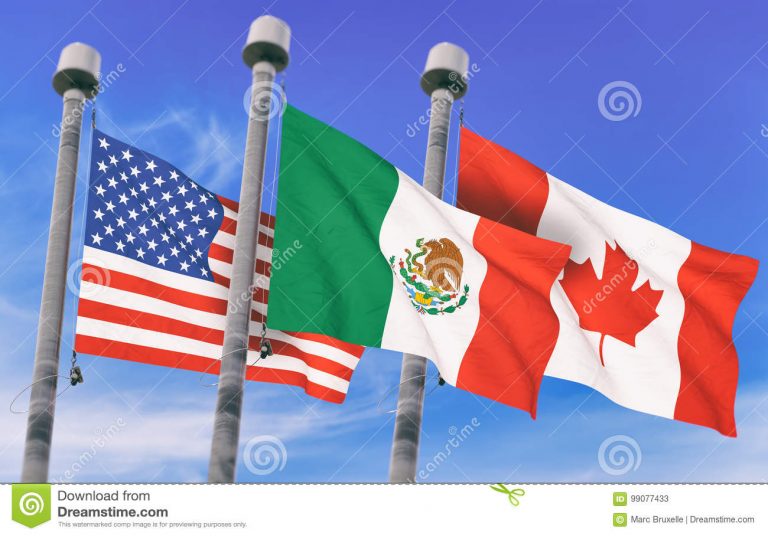
Next week, the leaders of Canada, Mexico, and the United States will meet, and a major point of disagreement may be whether Mexico violated a trade agreement by expanding state control of its energy industry.When the governments of Washington, DC, and Ottawa lodged a complaint against Mexico under the countries' joint trade agreement, the US-Mexico-Canada Agreement, tensions over Mexico's nationalist policies became a legal dispute in July (USMCA).
The case claimed that efforts made by Mexican President Andres Manuel Lopez Obrador discriminated against US and Canadian businesses by reshaping the market in favor of Pemex, Mexico's state-owned oil firm, and Comision Federal de Electricidad, the national power provider (CFE).The businesses also lamented the difficulties their operations were experiencing due to bureaucratic delays.
Although work has stalled, negotiations to settle the conflict have started, and Canada and the US decided last year to extend the process beyond its initial 75-day timetable.
If the matter cannot be settled through discussions, the USMCA allows for the convening of a dispute panel to make a decision.What defense does Mexico have?
Lopez Obrador has put on a confident front, asserting that "nothing is going to happen" and that Mexico has not breached any laws.
It follows his restructuring of the electricity market, which gave CFE preference over private enterprises in linking power plants to the grid in the sake of national sovereignty.He frequently justifies his resistance to foreign and private investment in the energy industry as a component of his mission to end corruption by claiming that previous administrations distorted the market in favor of private capital.
Additionally, he asserts that energy is a domestic issue and refers to a provision he added to the USMCA that declares Mexico's "inalienable" control of its oil and gas. The piece, according to critics, does not support Lopez Obrador's policy regarding international corporations.
Can Mexico resolve the conflict?
If a tribunal were asked to settle the conflict, the majority of specialists believe Mexico would lose. That might result in severe costs for Mexico and increase the possibility of harsh US tariffs.
Both nations have previously emphasized their desire to resolve the dispute before it goes before a panel.
After Mexico's economy minister left his position in October, negotiations slowed down. Several seasoned trade negotiators were fired by her successor, leaving an inexperienced team in charge.The new team claims that it has made recommendations that could solve two of the four consultation areas and that it is also taking other US concerns into consideration. However, there haven't been many glaring signs of significant advancement.
The ability of Lopez Obrador-inspired energy nationalists in the Mexican government to reach a compromise looks to be the key to a solution.
What negotiating tools does Mexico have?
It is challenging for Lopez Obrador to change course since he has positioned energy policy as a pillar of his presidency.
His administration is also aware that Mexico's support in combating illegal immigration typically carries more weight in Washington, DC because of its significance in US domestic politics, giving the government implicit, if unsaid, power.
The US economy and Mexican industry are so closely entwined that a trade dispute could be costly for both nations at a time when the region is trying to lessen its reliance on Asia and control skyrocketing inflation.
The conflict has nonetheless hurt investor confidence in Mexico. In order to finance solar energy production in northern Mexico and draw investment in greener manufacturing, particularly in the vital industry of automobile manufacturing, Lopez Obrador is looking to the US for assistance.
[zombify_post]

0 Comments