



















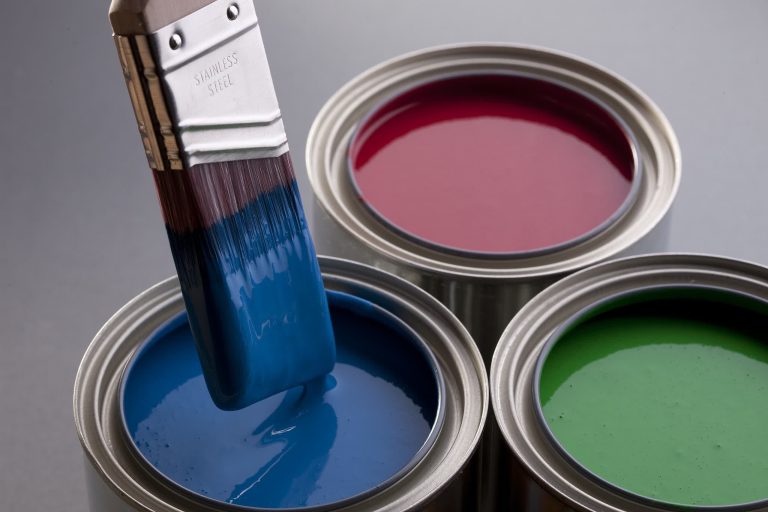
A bonding agent, such as oil, and pigments produced from heavy metals like cobalt, ochre, and cadmium, which produce blue, red, and yellow, respectively, are used to make traditional paint. In contrast to how we color the natural world with paint, insects like butterflies and beetles employ topography to create bright hues.
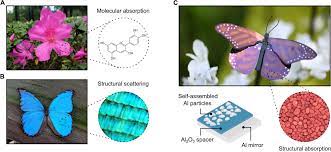
Consider the feather of a peacock. The iridescent blues and greens we see are caused by light diffracting through the submicroscopic ridges and curves in a peacock feather. Structural color is the name for this innate colour.
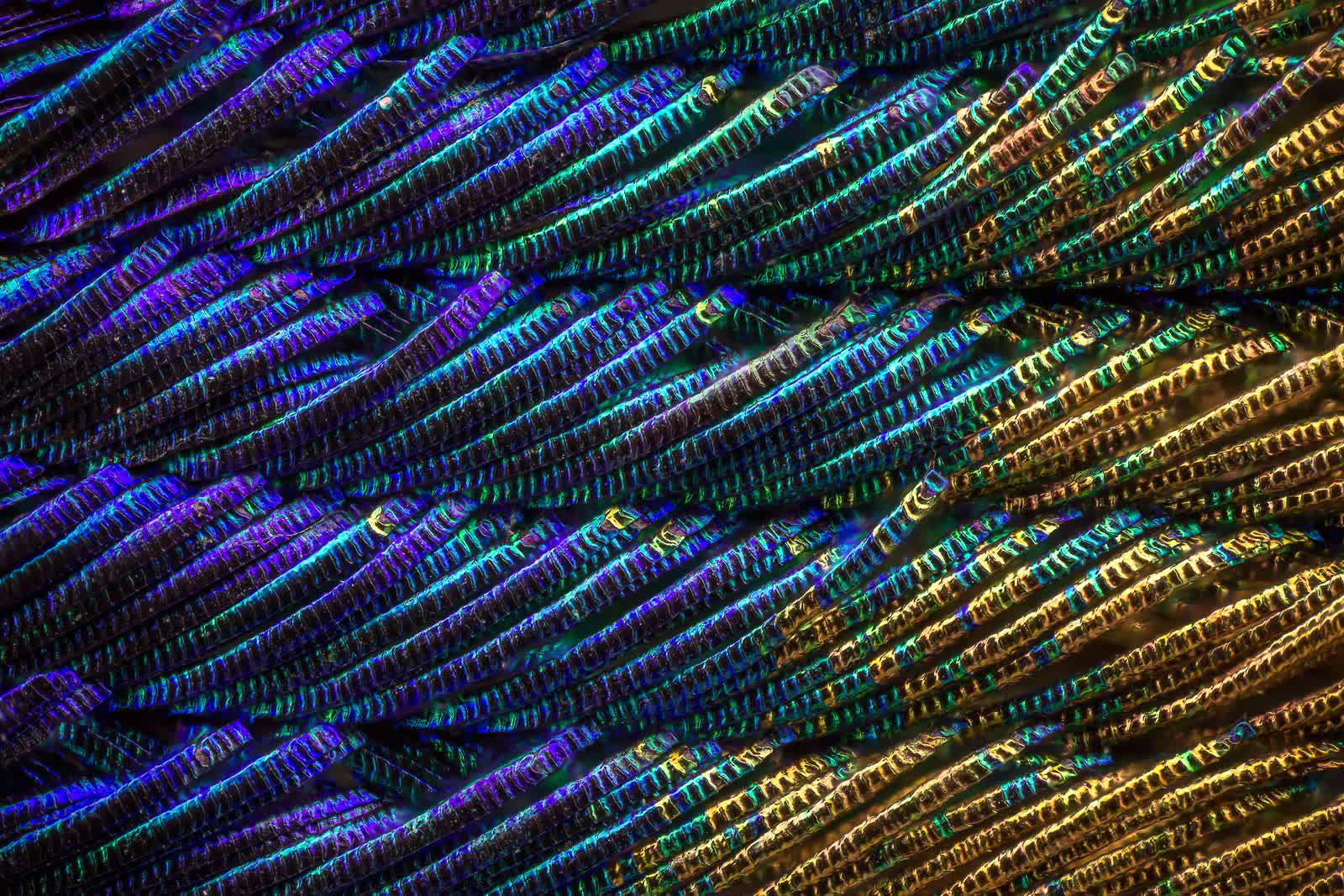 A Peacock's feather
A "first-of-its-kind" paint that replicates the structural coloration we observe in nature has been created by researchers at the University of Central Florida. Co-author of the article "Ultralight plasmonic structural color paint," Debashis Chanda, and his group made the discovery by mistake.
The first plan was to use an electron beam evaporator to create a long, continuous aluminum mirror. The aluminum, however, clumped together, forming microscopic "nanoislands," as they discovered after numerous unsuccessful attempts.
The mirror was unable to create the highly reflecting surface required for a mirror due to bunching. It was incredibly annoying, Chanda said. But he found that when the ambient light struck the nanoparticles, the aluminum's electrons were agitated and started to oscillate.
Furthermore, depending on the size of the nanoparticles, the electrons resonated with different light wavelengths. When white light struck the irregular surface, it bounced off of its ridges and eventually reflected as a single color.
According to Chanda, "you can truly create all hues just by adjusting the size of the nanoparticles."
As a result, the group started experimenting with producing different shades of paint by growing aluminum nanoislands in a double-sided mirror and then deliberately "dissolving" sheets of them into dust. Then, they created paint by combining binders with the various colored ingredients.
According to Chandra, a very thin covering is all that is necessary to color a surface due to its structural properties. He claims that a drop the size of a raisin is sufficient to paint an entire door. Its ultralightness is a feature that may be very advantageous to the airline sector.
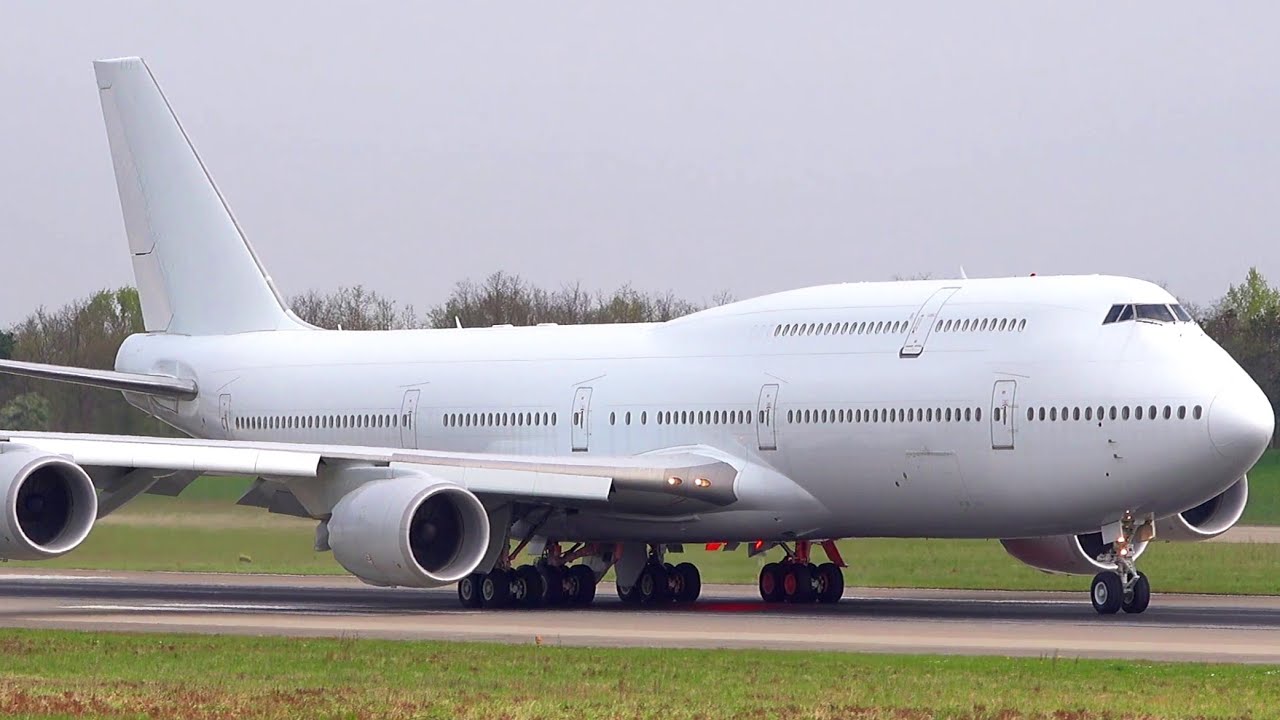 Boeing 747
A Boeing 747 requires about 1,000 pounds of paint. Chanda estimates it would take less than three pounds of his team's structural color to coat a jet, shaving over 997 pounds. It might not seem significant for a craft that weighs just south of a million pounds. However, just saving a little weight translates to massive savings in fuel.
[zombify_post]

0 Comments