



















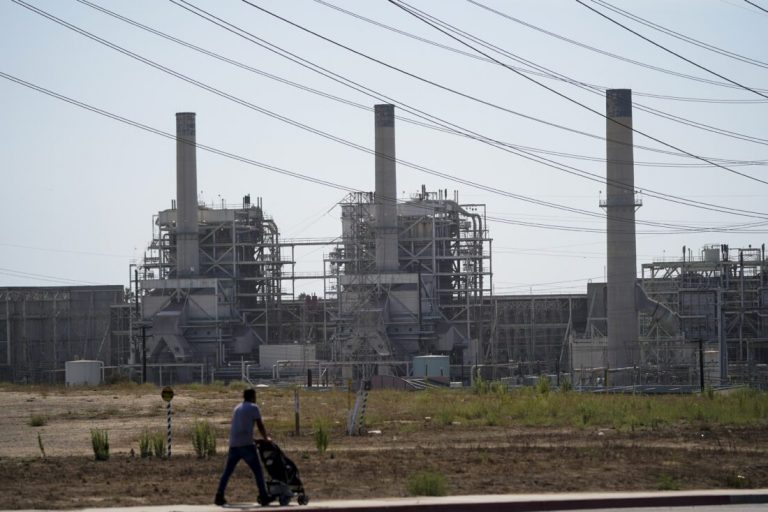
The world's first inventory of fossil fuel reserves, output, and emissions has been established by climate activists.
The register was described as the "first-ever fully transparent" and "public database that tracks fossil fuel production worldwide" in a statement released on Monday by Carbon Tracker and the Global Energy Monitor.The inventory, known as the Global Registry of Fossil Fuels, has information from more than 50,000 oil, gas, and coal fields spread over 89 nations, accounting for 75% of global production. Additionally, it makes previously dispersed or difficult-to-access data available to the general public, including investors, specialists, and activists.
The founder of Carbon Tracker, Mark Campanale, expressed his expectation that the registry would enable organizations to hold governments accountable, for instance when they grant permits for the extraction of fossil fuels, to the Associated Press news agency.
"Civil society groups have to get more focused on what governments are planning to do in terms of licence issuance, both for coal and oil and gas," said Campanale. "They actually have to start challenging this permitting process."The database's release and an analysis of the data it contains have been timed to coincide with two significant international climate negotiations: the COP27 in Sharm el-Sheikh, Egypt, which will take place in November, and the United Nations General Assembly in New York, which began on September 13.The world's remaining carbon budget, which is the maximum amount of carbon that may be emitted before a specific amount of warming—in this case, 1.5 degrees Celsius—occurs, can be used up by the United States and Russia, according to Carbon Tracker and Global Energy Monitor's analysis of the data (34.7 Fahrenheit).
Additionally, it demonstrates that these reserves would result in 3.5 trillion tonnes of greenhouse gas emissions, which exceeds all emissions since the Industrial Revolution."To fry the world, we already have access to enough fossil fuels for extraction. At this time, we cannot afford to use them all or even almost any of them. We've run out of time to construct new things in the same old ways, according to climate scientist Rob Jackson of Stanford University who wasn't involved with the database.
"I appreciate the focus on transparency in fossil fuel reserves and production, right down to individual enterprises. That's a special feature of the work, he remarked.According to Global Energy Monitor, the registry included information from government agencies, state-owned and commercial businesses, news and media reports, NGOs, and local contacts who might provide first-hand knowledge of a project.
The investigation found that the Ghawar oil field in Saudi Arabia, which spews out over 525 million tonnes of carbon dioxide year, is the most significant source of emissions among the 50,000 fields examined. The top 12 polluting locations were all in Russia or the Gulf, it continued.According to Rebecca Byrnes, the deputy director of the Fossil Fuel Non-Proliferation Treaty who assisted in compiling the registry, "we have very little time to manage the remaining carbon budget." "It's really difficult to measure or manage that output as long as we're not measuring what is being generated," she told the AFP news agency.
She added that the database may potentially be used to exert financial pressure in nations with substantial hydrocarbon reserves who face little public pressure to move away from fossil fuels.
We're not fooling ourselves into thinking that the registry will instantly lead to a significant governance framework for fossil fuels, she added. But it helps investors and other actors hold their governments accountable by illuminating the locations of fossil fuel extraction.According to Eric Christian Pedersen, head of responsible investments at Nordea Asset Management, the registry could aid investors in their efforts to identify which assets may be in danger of being uneconomic or "stranded" during the low-energy transition.
"Having all of this information at our disposal, cross-referenced, and searchable, is a huge assistance. Not the least of which is to assist us in focusing and enhancing our theme engagement and stewardship, according to Pederson. With the Registry, it will be considerably simpler to incorporate anticipated future emissions in the analysis and to identify and prioritize the enterprises that pose the biggest threat to assets that could become stranded.
[zombify_post]

0 Comments