



















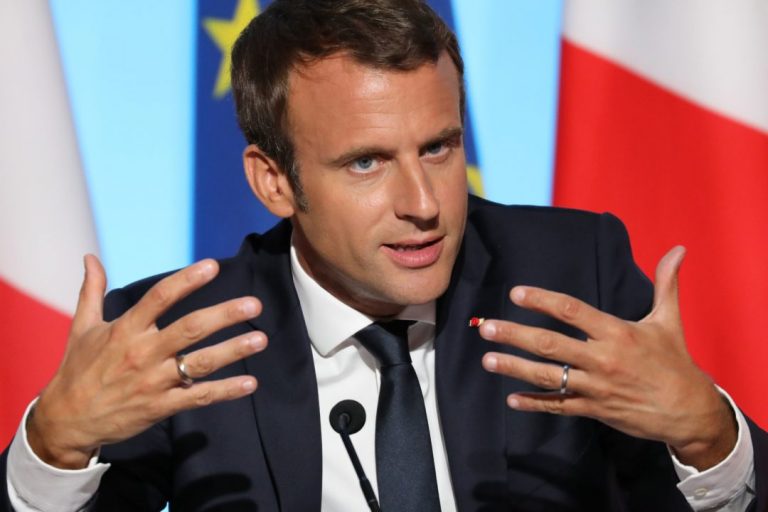
In France, voting for the high-stakes second-round legislative election has begun, with a rise in support for the left-wing alliance putting President Emmanuel Macron's ambitions for an outright majority in jeopardy.
On Sunday, voting began at 8 a.m. (06:00 GMT) and will end at 8 p.m.Macron is up against NUPES, a new left-wing alliance led by Jean-Luc Melenchon, a former Socialist. As severe inflation drives up the cost of living and sends shockwaves through the French political scene, the revitalized left is fighting back.
With around 26% of the vote in the first round of voting last Sunday, the two sides were neck and neck. The initial field of candidates in nearly all 577 constituencies has been reduced down to two individuals who will face off in the second round.
Macron's coalition is aiming for a 289-seat outright majority in order to push through harsh reforms.
According to polls, Macron's "Ensemble" (Together) coalition of centrist and center-right parties will win the most seats, but it is far from certain that it will achieve the threshold for an absolute majority.The far right is also expected to have its most significant parliamentary victory in decades.
The centre-right and left-wing coalitions have "radically divergent notions about what to do in the face of France's difficulties," according to Al Jazeera's Jonah Hull, reporting from Paris.
The centrists want to cut taxes, modify welfare benefits, and raise retirement age, whilst the left wants to tax the wealthy, raise the minimum wage, and reduce retirement age.
Failure to achieve an outright majority would necessitate some form of power-sharing among parties, something France hasn't seen in decades, or result in protracted stalemate and new parliamentary elections.If Macron and his partners fall short of an absolute majority by a few seats, they may try to recruit MPs from the center-right or conservative parties. If they lose by a larger margin, they may form an alliance with the conservatives or form a minority administration that will have to negotiate bills with other parties on a case-by-case basis.
According to Hull, less than half of France's electorate voted in the first round, prompting concerns about voter turnout. "Low turnout tends to work against incumbents," he added.In April, Macron was re-elected to a second term, defeating his far-right opponent Marine Le Pen by a large majority. Following the election of a president, French people have usually used legislative elections a few weeks later to give their newly elected leader a parliamentary majority.
[zombify_post]

0 Comments