



















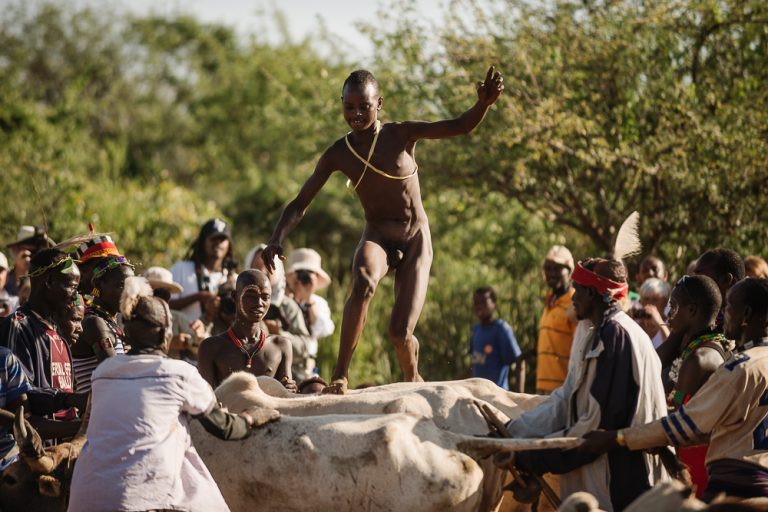
The ancient practice of bull jumping in southwest Ethiopia tests a man's readiness to start a family. The young Hamer lads travel the following path to become men.
The Hamer people are located in the Omo Valley in south-western Ethiopia, which stretches from the Omo River to Lake Chew Bahir. The inhabitants of the Omo Valley have lived a traditional lifestyle for many years.
Cattle play a big part in the culture of the Hamer tribe because most of them are pastoralists. Children are taught how to care for livestock and farm land from a young age.
GRAB IT BY THE HORNS
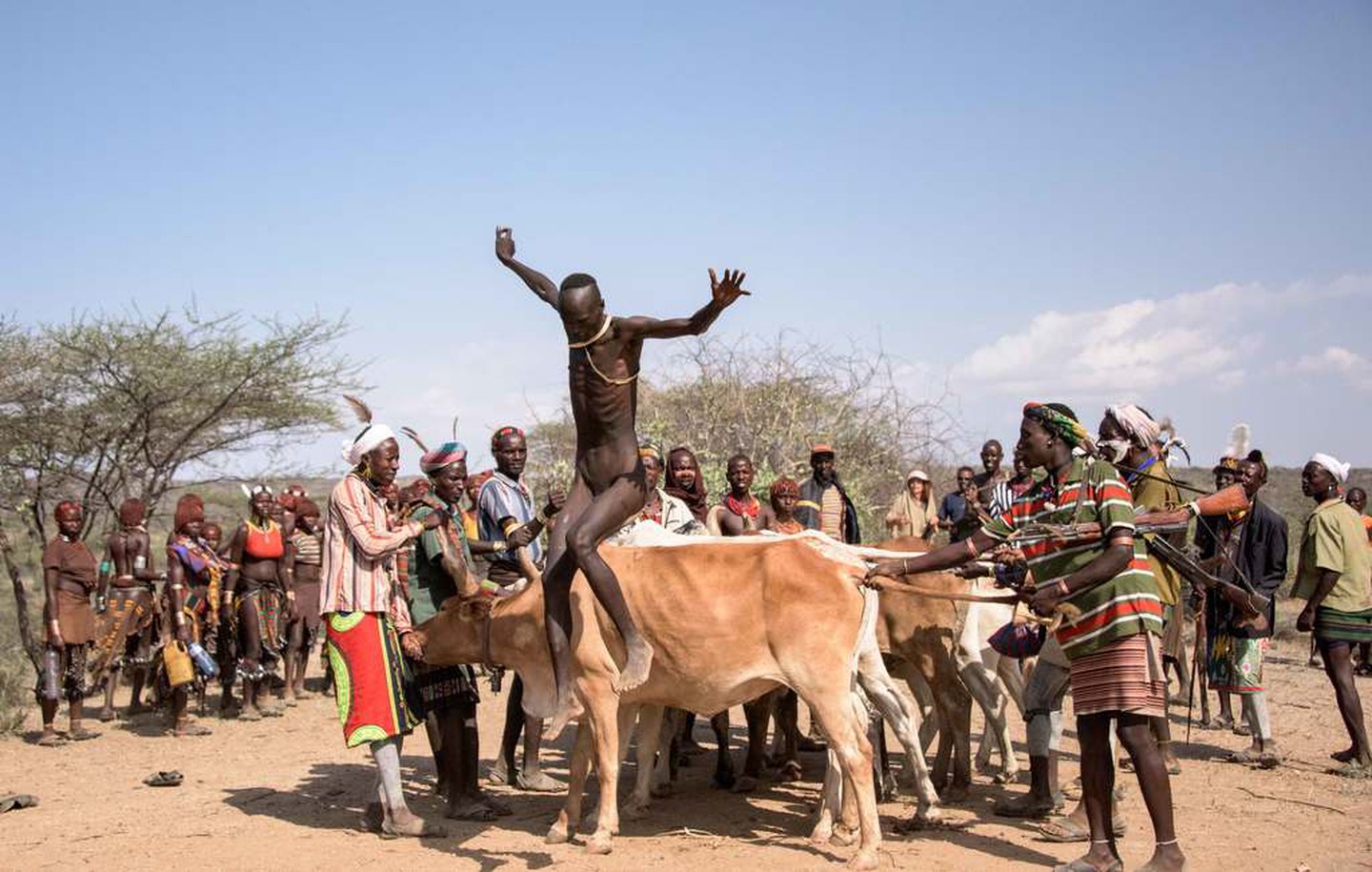
Hamer males must complete a rite of passage as teenagers before they may call themselves men and get married. The young boys' bravery and courage are put to the test during the ritual. They must learn how to overcome their fears in order to finish the task at hand; it is also their opportunity to grab the bull by the horns. The ceremony, which often occurs in October or November, entails running four times while standing on seven or ten bulls without falling. The traditional ritual, according to locals, has been practiced for over three centuries.
A family's eldest child must complete the rite of passage before his lesser siblings can do the same. When the oldest lad is prepared for the bull jump, the father or uncle makes the call. Some boys perform the bull leaping as young as five years old with the assistance of community people, depending on their father's choice. The father gives the boy a small stick known to the Hamer people as boko to signify that he has selected his son to undergo this rite of passage. The youngster must next visit each of his relatives' homes to deliver the boko his father gave him and extend invitations to the event. The trip can take several days.
The boy’s family decides when the big day should be, and the decision is based on the amount of time it would take them to prepare a feast. As the Hamer people don’t use calendars, the boy gives each relative a coil of rope carefully marked to show the number of days leading up to the ceremony. Every day, the relatives cut a piece from the rope to keep track of how many days are left before the ritual.
A LEAP TO BECOMING A MAN
The young boy is then given the title Maza, a significant accomplishment that indicates he is prepared to marry a woman chosen for him by his father, if he is able to run over the bull's back without falling four times. Hamer men are permitted to wed up to four wives, but after the ceremony their father will always choose the first wife. The father of the boy is expected to offer 30 cows as dowry to the family of the bride.
The young youngster will have to wait another year to try again if the odds are against him and he stumbles more than four times.
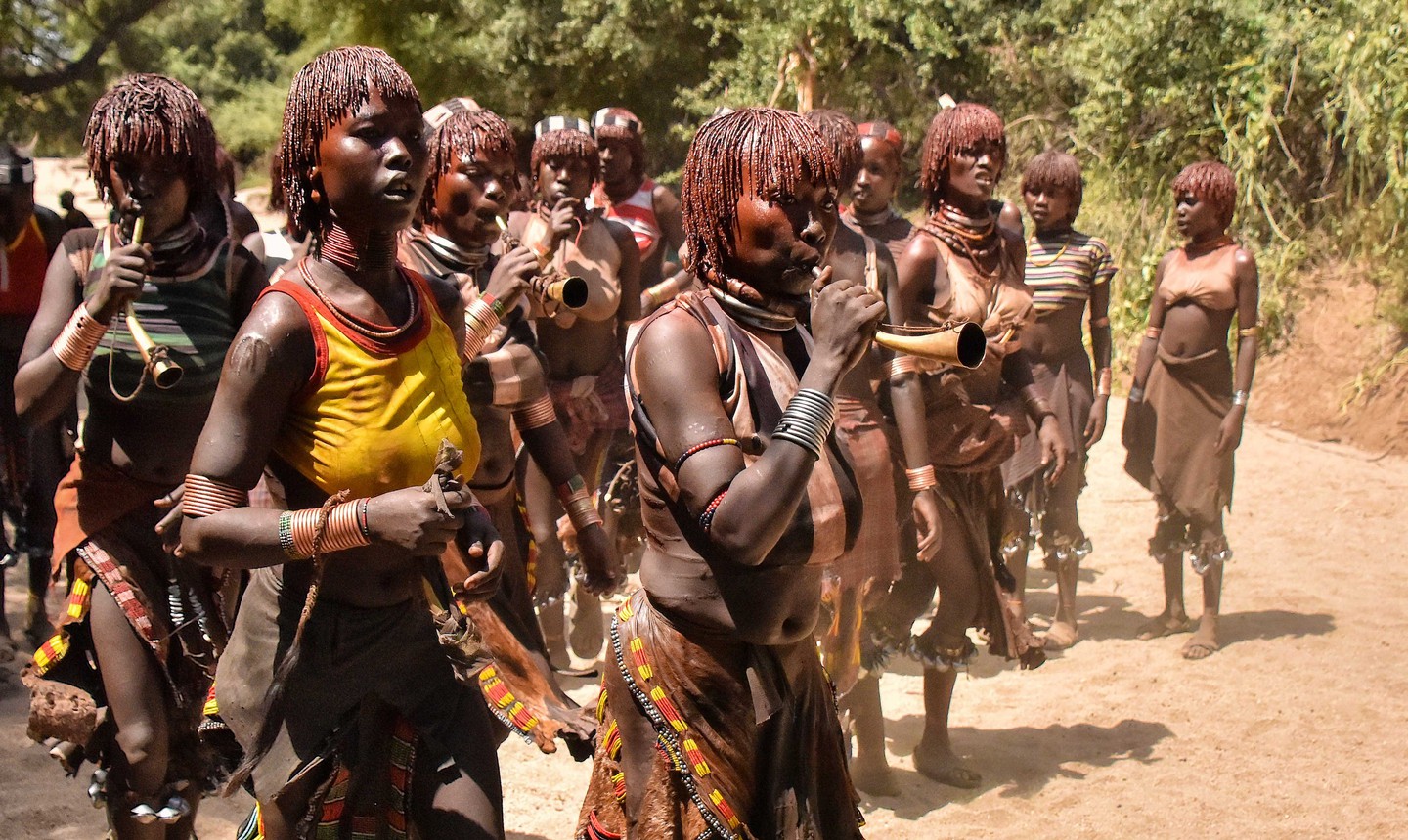
If successful, the tribe puts an animal skin around the young boy's neck, blows horns, jumps, and cheers him on for becoming a man. Up until the wee hours of the morning, people are celebrating a young kid becoming a man.
[zombify_post]

0 Comments