



















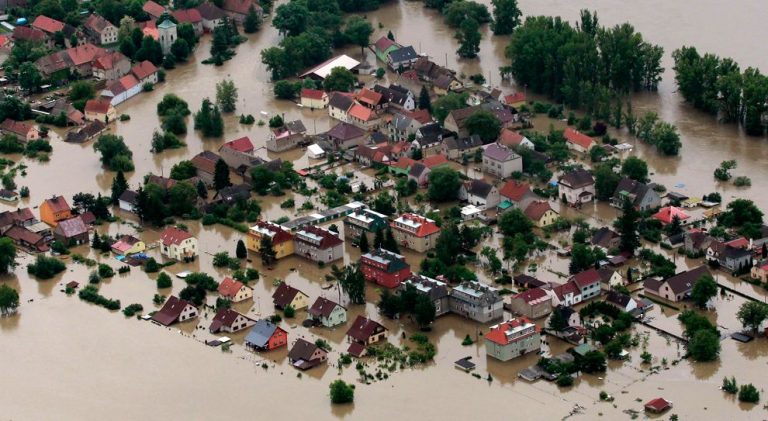
As the most recent in a series of storm systems brought catastrophic floods to already soggy regions and promised snowfalls of up to two meters, United States President Joe Biden declared a major disaster in the state of California (six feet).
The National Weather Service (NWS) predicted that the most recent system will bring "heavy lower-elevation rain, considerable mountain snow, and strong winds," with "another rush of Pacific moisture" anticipated on Monday.
A significant agricultural sector south of San Francisco Bay, the lower Salinas River valley was projected to see "disastrous floods."
According to a statement from the White House, late on Saturday, Biden "declared that a major disaster exists in the State of California and ordered Federal aid to supplement State, tribal, and local recovery efforts in the areas affected by severe winter storms, flooding, landslides, and mudslides."
According to the statement, assistance can take the form of grants for temporary housing and house repairs, low-interest loans to cover uninsured property losses, and other initiatives to aid people and business owners in recovering from the disaster's consequences.
For emergency work in the counties of Merced, Sacramento, and Santa Cruz, "Federal financing also is available to State, tribal, and qualifying municipal governments and certain private nonprofit organizations on a cost-sharing basis."It is known that 19 persons have perished in the past three weeks as a result of storm-related incidents.
Some of these were drivers who were discovered in submerged cars, individuals hit by falling trees, and a husband and woman who perished in a rockfall.
The search for five-year-old Kyle Doan, who was washed away in floodwaters as his mother tried to bring him to safety from their car, was put on hold due to rising waters and inappropriate conditions, the San Luis Obispo County Sheriff's office reported on Saturday.
Despite warnings from authorities, the majority of people in Spreckels, a town a few hundred meters from the Salinas river, decided not to evacuate.
While walking his dog under a light rain, Robert Zagajeski told the AFP news agency, "It looks like we could have missed kind of the worst of it."
Farm worker Erick Diaz, 30, could see the flooded fields from his home next to the river, which was a few kilometers away. He had also continued to stay despite being told to go.
He declared, "I have nowhere to go and everything is perfect right now.
Felton Grove was submerged by floodwaters from the swollen San Lorenzo River, which passes through the town in the Santa Cruz Mountains and forced evacuations.
Water levels reached stop signs and parked cars, and garbage cans were observed floating down streets.Not finished
According to the NWS, thousands of Californians were subject to evacuation orders and advisories as of Saturday night, and almost 26 million people were still under a flood watch.
At a briefing with local officials, California Governor Gavin Newsom stated, "The fact is that this is just the eighth of what we believe will be nine atmospheric rivers — we're not done." He advised people to be attentive about safety for the next 24 to 48 hours.
Despite the fact that this is taking on all around California, Newsom said, "I want to emphasize that you guys are disproportionately receiving the brunt of it, and if you feel that way you're right."After years of drought, the storms of recent weeks were initially anticipated, but by this point, officials have stated, the flooding has been "disastrous."
In the vicinity of Salinas, 58-year-old farm worker Manuel Paris told AFP, "This location was hammered badly by the drought during the last years." We're no longer accustomed to this much rain.
The NWS warned that an additional 5.0 to 7.5 centimeters (two to three inches) of rain, 90 to 180 centimeters (three to six feet) of snow in some areas of the Sierra Nevada, and high gusts up to 80 km/h could all contribute to new flooding and mudslides in central and coastal California (50 mph).
According to poweroutage.us, there were more than 68,000 utility customers without electricity on Saturday morning, a number that decreased by more than half in the afternoon.
[zombify_post]

0 Comments