



















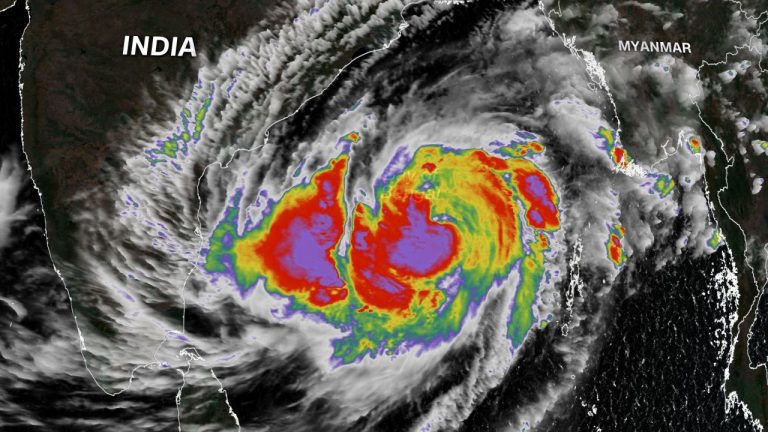
A tropical storm that is expected to approach Bangladesh's Cox's Bazar, where some 1 million people reside in flimsy shelters in what many people consider to be the world's largest refugee camp, is intensifying in the Bay of Bengal.
The first cyclone to form in the Bay this year, Cyclone Mocha is forecast to intensify further before making landfall on Sunday, most likely in western Myanmar's Rakhine state, not far from the Bangladeshi border.
Mocha, which according to the Joint Typhoon Warning Center has strengthened into a category 1 Atlantic hurricane, is currently heading toward the north at a speed of 11 kilometers per hour (7 miles per hour).
According to the organization, the storm's winds might reach a maximum speed of 220 kph (137 mph), which is comparable to a category 4 Atlantic hurricane, right before it makes landfall on Sunday morning.The Indian Meteorological Department urged fishermen and trawlers from venturing too far into the Bay in the next days as Mocha had grown stronger and became a very severe cyclonic storm.
Low-lying coastal regions in the path of the hurricane were expected to be inundated at the time of landfall by a storm surge of up to 2.5 meters (8.2 feet), according to the agency's projection.
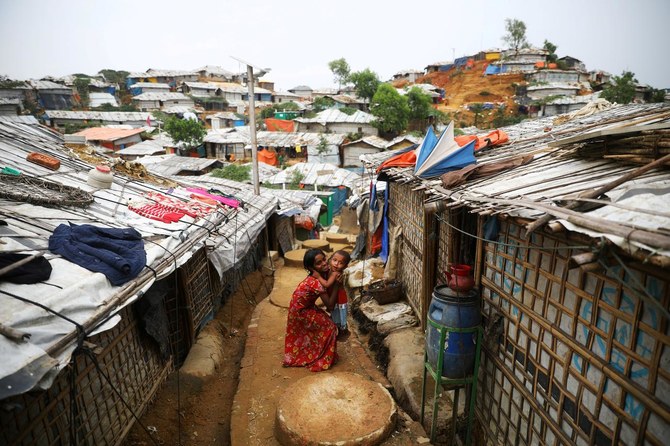
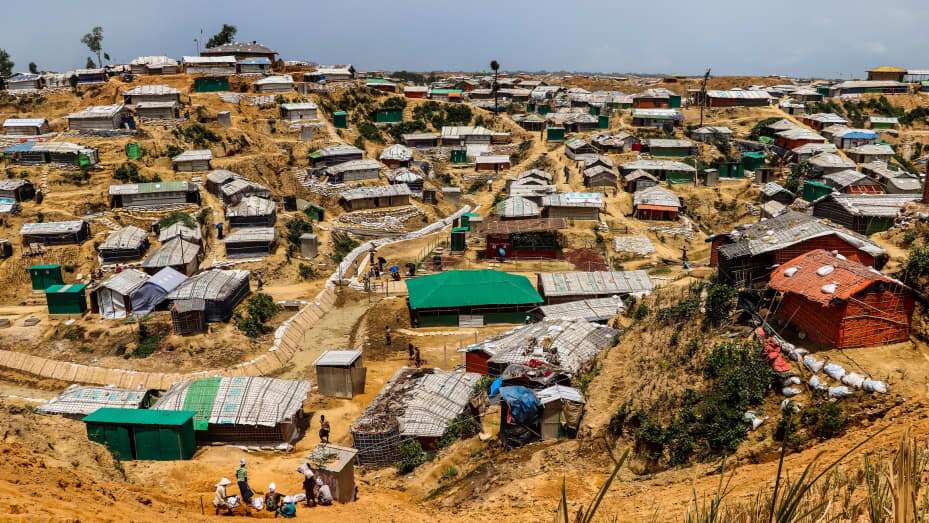
That includes Cox's Bazar in Bangladesh, where members of the stateless Rohingya population live after fleeing persecution in adjacent Myanmar in 2017 due to a military campaign.
Many people inhabit tarpaulin and bamboo huts that are located on steep hillsides and exposed to landslides, severe winds, and rain.Concerns exist for the hundreds of Rohingya refugees living on Bhasan Char, a barren island facility in the Bay of Bengal that is prone to flooding.
Aid organizations are stepping up their emergency preparedness and reaction with local and refugee communities ahead of Mocha's anticipated landfall.
In collaboration with the government and local humanitarian organizations, the UN refugee agency in Bangladesh tweeted that "emergency preparations in the camps and on Bhasan Char are underway."
The UNHCR tweeted that hundreds of Rohingya refugee volunteers have received training on how to identify hazards, educate local communities, evacuate people when necessary, and respond to disasters.
[zombify_post]

0 Comments