



















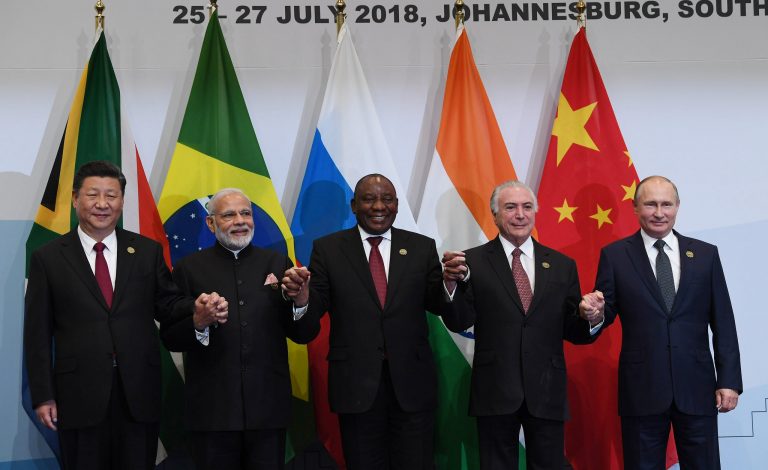
China will host the 14th BRICS Summit on Thursday in what analysts see as a chance for Beijing to promote its governance and development model at a time of global instability.
Chinese President Xi Jinping will join with the leaders of Brazil, India, Russia and South Africa via video link to discuss issues of mutual concern as part of the summit themed around ushering in a “new era” for global development.Chinese state media highlighted the significance of the BRICS ahead of the summit in Beijing, praising the group for fostering "multilateral cooperation with non-Western styles, forms, and principles" at a time when "the US (is) pulling its Western allies to'rebel' against globalization." The BRICS is an acronym for the five emerging economies that collectively make up about one-quarter of the global economy.
"Reject Cold War mentality and bloc hostility, and work together to build a global community of security for all," Xi urged the group in May.
The leaders of the five nations keep a certain distance from the liberal order that is led by the United States notwithstanding their stark differences.
Brazil, China, India, or South Africa's presidents did not publicly denounce Russian President Vladimir Putin for his nation's invasion of Ukraine earlier this year.The 2022 summit offers Beijing with a timely platform to push its vision for how international relations should be conducted, according to observers, against a difficult geopolitical backdrop that includes war in Europe and rising economic decoupling between China and the US.
According to Huang Yanzhong, senior fellow for global health at the Council on Foreign Relations, "BRICS is a form of diplomatic counteroffensive by China against both the rebirth of NATO and the development in Indo-Pacific structures that are designed to hold its influence in check."
Beijing is currently experiencing a growing sense of isolation as tensions with the US and its allies over its covert support for Russia's incursion intensify.
Beijing will use the summit to "emphasize and criticize the omnipresent character of American sanctions that are placed on thousands of persons and entities around the world," according to Phar Kim Beng, a former director of the Political-Security Community at the ASEAN secretariat in Jakarta.Phar Kim Beng said Al Jazeera, "This is especially pertinent in a forum focused on the Global South." "China continues to build on its history of 'always side with the third world,' as Deng Xiaoping famously declared, through BRICS. Thus, I anticipate that they will exploit this as an additional opportunity to criticize American economic sanctions and to urge an end to them.China is anticipated to emphasize its own role in the global economy in addition to criticizing the US.
The agenda for this year includes a wide range of themes, but renewed multilateralism for global economic recovery, deeper collaboration on climate action, and stronger coordination on pandemics and public health will receive special attention.
According to Indo-Pacific expert Stephen Nagy, senior scholar at the MacDonald-Laurier Institute in Ottawa, Canada, "in terms of the subject area that's most important for Beijing right now, I think it's about global economic recovery, and keeping markets open."
"International commerce is essential to the growth of China's economy. The Indo-Pacific Economic Framework, a new standard-setting agreement, or proactive coalitions that are trading with each other to ensure safe and reliable flows of energy-critical materials, minerals, and rare earth materials, are what we're seeing, according to Nagy, referring to US President Joe Biden's signature economic initiative unveiled last month in Tokyo.
Beijing wants to halt this, and Nagy believes that any movement toward ending China's economic isolation from the rest of the world is positive from their perspective.
The economic recovery, according to Huang, will likely be the main concern, with public health following closely behind.
Since other BRICS nations like Russia and India have excellent vaccine development capacities, he added, "I think vaccine diplomacy will also be essential because China is being left out of some of the Biden administration's activities on pandemic readiness."
growth of BRICS
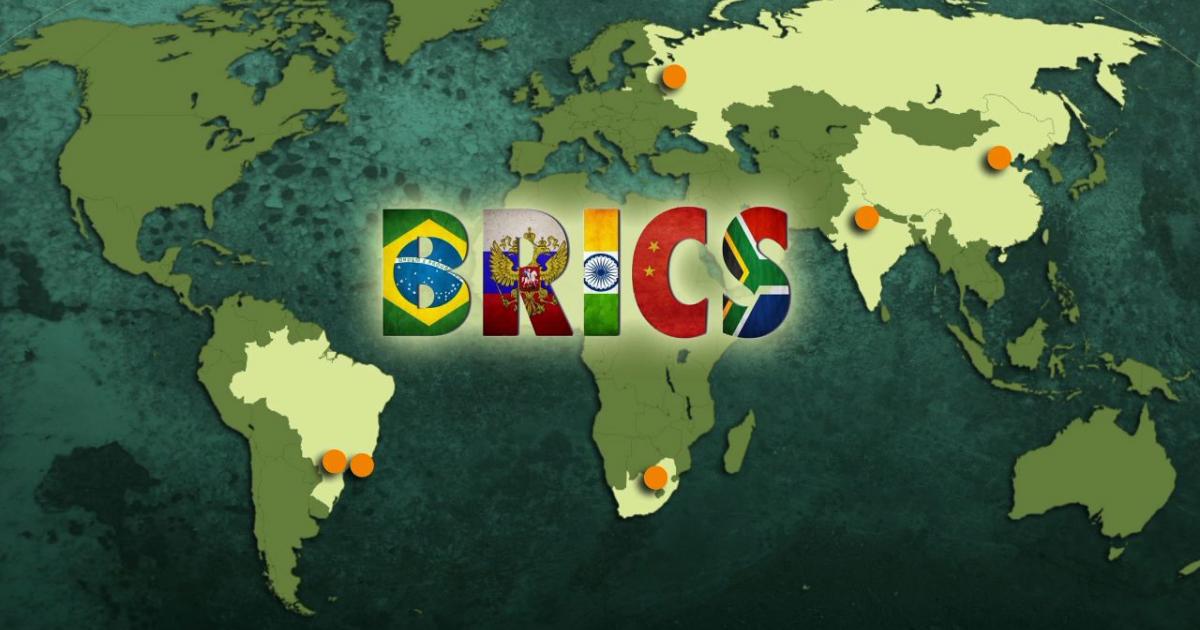
At a meeting of the BRICS foreign ministers in May, China suggested that the grouping be expanded. Although the idea was well received by other member nations, no official announcements of the potential new members have been made.Looking at a country's stance on Ukraine and how it votes on the crisis at the UN might give us an idea of which nations might be invited, Huang added. "Those developing nations that did not vote or backed Russia might be recruited to join."
However, given that it is competing with rivals for influence over emerging economies, China may have its job cut out for it in making BRICS an appealing alternative.
Many of the things China is promoting through BRICS are appealing to developing nations, but Beijing has a difficulty since there are more and more options available to them. Whether it be the open and free Indo-Pacific Vision with a focus on standard-setting, sound infrastructure, tools for good governance, or alternative funding, as well as infrastructure connection projects spearheaded by the EU and Japan, Nagy added.
There are numerous efforts and projects that can help developing nations take the lead in their own development and reduce their dependence on China, he continued.
"This rivalry could force China to be more open and rule-based in its agreements along the BRI [Belt and Road Initiative] and through the ADB [Asian Development Bank], which I think will be crucial in reducing their external geopolitical impact."
[zombify_post]

0 Comments