



















ASHINGTON, D.C. — Even before the commencement of the war in Ukraine, an international alliance to mobilize the world against a Russian invasion came together so swiftly that President Biden later marveled at the "purpose and unity discovered in months that took us years to achieve."
With the crisis now in its fourth month, US officials are facing the disappointing fact that the vast coalition of nations spanning North America, Europe, and East Asia may not be enough to break Ukraine's approaching deadlock.
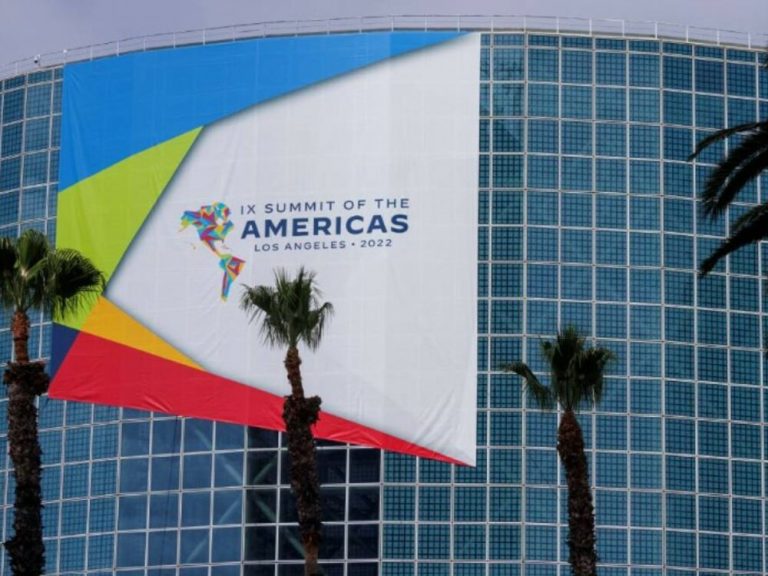
With increasing urgency, the Biden administration is attempting to persuade or cajole countries seen as neutral in the conflict by Washington — such as India, Brazil, Israel, and the Gulf Arab states — to join the campaign of economic sanctions, military support, and diplomatic pressure aimed at further isolating Russia and bringing the war to a decisive end. Despite their ties with the US on other critical security issues, few, if any, of them have so far been willing.Mr. Biden is taking a huge diplomatic and political risk this summer by arranging a trip to Saudi Arabia, which he previously described as a "pariah." On the sidelines of the Summit of the Americas in Los Angeles on Thursday, he met with Brazilian President Jair Bolsonaro. Mr. Bolsonaro paid a visit to Moscow a week before Russia invaded Ukraine, declaring "solidarity" with Russian President Vladimir V. Putin.Mr. Bolsonaro preempted any push by Mr. Biden on Russia in Los Angeles, saying that while Brazil remained open to assisting in the conclusion of the war, "we have to be cautious given our dependency on certain external parties.""I'm in charge of a country," he explained.
Officials from the United States realize the challenges of persuading countries that they can balance their own interests with the American and European drive to isolate Russia.
"One of the biggest problems we have today is the fence-sitter problem," Samantha Power, the head of the United States Agency for International Development, said after a speech on Tuesday about the administration's efforts to strengthen free speech, fair elections, and other democratic systems against authoritarian leaders around the world.
She expressed optimism that Russian atrocities in Ukraine will inspire neutral states to join the anti-Russia coalition, citing "our collective interest in norms of the road that all of us would like to see observed, and none of us would like to see used against our population."
Russia and its allies, particularly China, have slammed the US government's efforts to broaden the coalition, which includes Canada, Japan, South Korea, Australia, and New Zealand in addition to European states.
"Isolating a country, especially one as large as Russia, is unthinkable in the current world," Mr. Putin's spokesperson, Dmitry Peskov, said on Thursday, according to official media.
The United States "pressed countries to choose sides in the dispute between Russia and Ukraine and wantonly threatened to impose unilateral sanctions and long-arm jurisdiction," according to Zhao Lijian, a Chinese Foreign Ministry official. "Isn't this coercive diplomacy?" he added.
The ruble, Russia's currency, plummeted after Mr. Putin launched his invasion of Ukraine in February. However, it has subsequently recovered as Russia continues to earn hard cash by selling oil and other goods to countries such as China, India, Brazil, Venezuela, and Thailand.
The choice of whether or not to join with the United States can be life-or-death for some countries. Drought-stricken African countries have been cautioned not to acquire grain stolen from Ukraine at a time when food prices are rising and millions of people may be starving.
"Key strategic middle powers like India, Brazil, and South Africa are treading a very fine line in order to preserve their strategic autonomy and cannot be expected to simply sidle up to the United States," said Michael John Williams, a professor of international relations at Syracuse University and a former adviser to the North Atlantic Treaty Organization.
Mr. Williams explained that "Washington believes this conflict will be won in the West," while "the Kremlin believes it will be won in the East and the Global South."
35 countries, largely from the Middle East, Africa, and South Asia, abstained from voting on a United Nations resolution denouncing Russia's aggression against Ukraine in March. Despite the fact that 141 of 193 states condemned Russia, this frightened American officials and their allies. Only five states voted against the bill, including Russia.
Brazil passed a resolution condemning Russia, and Mr. Bolsonaro has pushed for peace talks to end the conflict. His country, though, continues to acquire fertilizer from Russia and Belarus, a Russian ally.
India and South Africa both voted no at the United Nations. India has a long-standing strategic relationship with Russia, which it relies on for oil, fertilizer, and military hardware. India has been a difficult country for the Biden administration to convince to join its coalition.
Officials of India claim that their Russian imports are small. India's foreign minister, Subrahmanyam Jaishankar, rejected inquiries about the matter during a visit to Washington in April, saying that "probably our entire purchases for the month would be less than what Europe does in an afternoon."
"So you might want to consider it," he suggested.
However, Europe is reducing its energy imports as part of a partial embargo on Russian oil, while India is said to be in talks with Moscow to enhance its already growing crude oil purchases.
South Africa's relations with Russia date back to the Cold War, when the Soviet Union backed the anti-apartheid campaign, which shifted the country's internal power dynamics.
Although trade between the two countries is small, South Africa has always been skeptical of Western colonialism and the United States as an unparalleled powerhouse, as have many other countries. South African President Cyril Ramaphosa has accused NATO of inciting Russia to war and has urged for a resumption of diplomatic talks. Mr. Biden pushed him to adopt "a clear, unified international response to Russian aggression in Ukraine" in a phone call in April, according to a White House statement.
A month later, Mr. Ramaphosa bemoaned the conflict's impact on "bystander" countries, claiming that "the sanctions that have been placed against Russia will also affect them."
Along with Russia and China, Brazil, India, and South Africa make up a group of countries that account for one-third of the world economy. Moscow promised to build oil and gas refineries with its other partners during an online meeting of the group's foreign ministers last month. The group also examined the possibility of enlarging its membership to include more countries.
Other countries who voted no at the UN, like as Uganda, Pakistan, and Vietnam, have accused the US-led anti-Russia alliance of stifling any prospect of peace talks through its military support for Ukraine. Officials from the United States and Europe claim that the weaponry and intelligence they have provided are solely for the purpose of assisting Ukraine in defending itself against Russia's military.
The president's preparations to visit Saudi Arabia, despite his prior denunciations of the country's homicidal activities and suspected war crimes, exemplify the administration's mounting urgency. Mr. Biden's approach, which has already drawn fire from top Democrats, is geared in part at persuading Saudi Arabia and the United Arab Emirates to assist Ukraine on the edges. One goal is for those countries to coordinate a significant increase in oil output in order to help lower world prices while the US, Europe, and others boycott Russian oil.
The declared neutrality of the two Gulf Arab states, which buy American armaments and lobby Washington for policies against Iran, their biggest foe, has dismayed US officials.
Israel, which also buys American armaments and is America's closest Middle East partner, has expressed support for Ukraine. Simultaneously, it has resisted backing some sanctions and outright condemnation of Russia.
Mr. Bolsonaro had indicated he would not attend the meeting of most of the hemisphere's leaders of state until Mr. Biden offered to meet with him in Los Angeles. Former Connecticut Senator Christopher J. Dodd, a special adviser to the summit, had to make a direct appeal to persuade Brazil to attend.
The Biden administration is anticipated to continue talking to Mr. Bolsonaro about Brazil's ties with Russia and China, according to Valentina Sader, a Brazil analyst at the Atlantic Council.
She did say, though, that Mr. Bolsonaro was unlikely to move away from Mr. Putin. "Brazil is looking out for its own interests," Ms. Sader remarked.
Officials in the United States have reached the same conclusion about China, Russia's most significant strategic partner. They argue that China has plainly chosen to side with Russia, as indicated by Chinese officials' repeated repetition of Mr. Putin's critiques of the US and NATO, as well as their dissemination of disinformation and conspiracy theories that weaken the US and Ukraine.
Mr. Putin and Chinese President Xi Jinping met in Beijing on Feb. 4, three weeks before Russia launched its full-scale assault, and the two governments pledged a "no limits" relationship.
During Mr. Biden's visit to Japan in late May, China and Russia conducted their first combined military drill since the start of the Ukraine conflict, flying strategic bombers over the waters of northeast Asia.
However, despite Moscow's requests, China has refused to provide economic or military assistance to Russia, according to US sources. Mr. Biden warned Mr. Xi in a video chat in March that providing material aid to Russia would have "consequences," and Chinese officials and business executives fear that their companies may face sanctions if they provide significant support to Russia.
"Secondary sanctions can bite," said Alexander Gabuev, a senior fellow at the Carnegie Endowment for International Peace who was recently posted in Moscow. "Many Russian sources tell me they've spoken to the Chinese but haven't received a response."
[zombify_post]

0 Comments