



















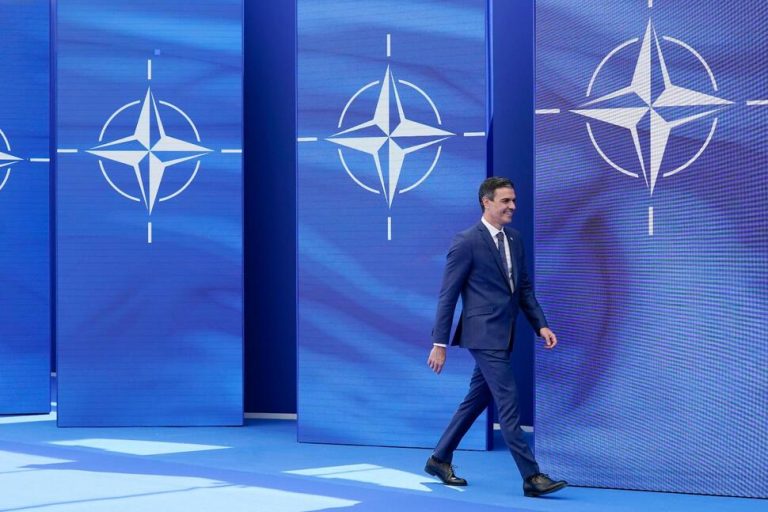
The NATO 2022 summit will bring together the heads of state of the largest defense alliance in the world this week in Madrid.
The high-stakes gathering, which takes place from June 28 to 30, coincides with an uptick in world unrest caused by Russia's conflict in Ukraine.Here are five aspects of the summit that, according to security analysts, may have an impact on the defense and security agendas of nations not only in the West but also elsewhere in the world.
What's going on and why is it significant
NATO Secretary-General Jens Stoltenberg emphasized that the alliance's relationship with Russia was at its "lowest point since the end of the Cold War" during the NATO summit held in Brussels the previous year.
When Russia invaded Ukraine in February, his predictions came true, severely deteriorating relations between NATO and the Kremlin.
According to Harry Nedelcu, head of policy at Rasmussen Global and coordinator of the organization's task force for the Free Ukraine, the summit will probably result in an agreement by NATO to increase its presence on its eastern flank."At the Warsaw summit [in 2016], a strengthened forward presence with rotational battalions in Poland and the Baltic nations was already decided. Allies will decide to have a stronger and probably even more long-term presence in the east at the Madrid meeting, he predicted.
The number of NATO's high readiness forces will be increased, according to Stoltenberg, to "far over 300,000."
NATO has demonstrated incredible solidarity since Russia's invasion of Ukraine, according to Elisabeth Braw, senior foreign policy and defense fellow at the American Enterprise Institute, and this must continue.
However, Braw said Al Jazeera, "that demonstration of unity hasn't been simple because different alliance member states have quite varied geographical settings and conceptions of the globe."Right now, it would be a significant setback and a sign of weakness that NATO's adversaries would exploit if they started quarrelling or disagreeing about what to do to support Ukraine."According to Braw, the NATO membership applications from Finland and Sweden will be the cherry on top of this year's summit.Both nations announced in May that joining the alliance would be a positive step in light of the new geopolitical conditions created by Russia's invasion of Ukraine, letting go of decades of military neutrality.
The Kurdistan Workers' Party (PKK), a banned organization that Turkey and its allies have designated as a "terrorist" organization, has been hiding out in the Nordic neighbors' countries, according to Turkey, which has accused them of stalling the accession process.
Reporters were informed by Stoltenberg during a recent trip to Sweden that NATO was making every effort to allay Turkey's worries "as soon as feasible."
Because Turkey continues to oppose it, it is extremely doubtful that Sweden and Finland will be invited to join the alliance in time for the summit, Braw told Al Jazeera.
"Turkey has no problem acting like a jerk. But it is undeniable that Turkey has had legitimate national security worries about the Kurds. Sweden specifically wants to make compromises there, she said.The eastern European expansion of NATO has long drawn criticism from the Kremlin.As part of his security demands to NATO, Russian President Vladimir Putin excluded Ukraine from membership.
Volodomyr Zelenskyy, the president of Ukraine, stated he recognized that Ukraine could no longer join NATO when speaking at a gathering of the Joint Expeditionary Force in March, where some NATO nations gather to discuss crisis response strategies.
He stated, "These are truths and must be acknowledged. For years we heard about the seemingly open door, but have also heard that we will not enter there.
According to Braw, Ukraine's desire to join the EU was more plausible than NATO membership in the near future and given the existing situation.
That is a really essential aim for them to accomplish, and she noted that it will probably take a lot of work.
The biggest and most effective approach to make Ukraine secure, in Nedelcu's opinion, is to ensure that the nation has a strong military and a robust defense sector so that it "would become a porcupine hard to attack."How much money each NATO member nation spends on defense is one of the most contentious issues.Members of the alliance agreed in 2006 that each NATO nation would invest 2% of its GDP in defense. However, there has been disagreement among the members as to who spends the most on defense.
The scope of this spending discussion has been widened by the current conflict in Ukraine.
According to Nedelcu, a growing number of NATO countries are crossing the 2 percent threshold.
"After the war, we observed that some nations, like Germany, significantly increased their defense spending. The continuation of that trend and seeing partners seriously increase their defense spending will thus be emphasized during the summit, he said.Last year at the NATO summit, Stoltenberg emphasized that "China was getting closer to the alliance" and emphasized the need for NATO to establish a unified and unambiguous stance toward Beijing.Nedelcu believes Stoltenberg's plea for a stance on China will be amplified in Madrid and that it is crucial to keep an eye out for strong language on China at the summit given China's continued obfuscation of the Kremlin's war in Ukraine and threats against Taiwan and other countries in the Indo-Pacific region.
Discussions about China as a geopolitical rival will take place among alliance members. This raises the question of what role NATO will attempt to play in Indo-Pacific security and how it plans to influence Taiwan Strait or Indo-Pacific security, which is becoming more and more connected to North Atlantic security, Nedelcu told Al Jazeera.
The world is becoming more divided between autocracies and similar-minded democracies, according to Nedelcu, who noted that nations like Japan and South Korea are set to attend the summit.
According to Ramon Pacheco Pardo, a professor of international politics and regional ambassador for East and Southeast Asia at King's College London, statements on North Korea may be made at the summit due to the participation of Japan and South Korea.
That matters for South Korea, he continued, because it might demonstrate that other nations in Europe and the US similarly view North Korea as a threat.
And since NATO is most adept at sharing information and conducting cyber operations in the Asia-Pacific region, this might result in practical cooperation.
[zombify_post]

0 Comments