



















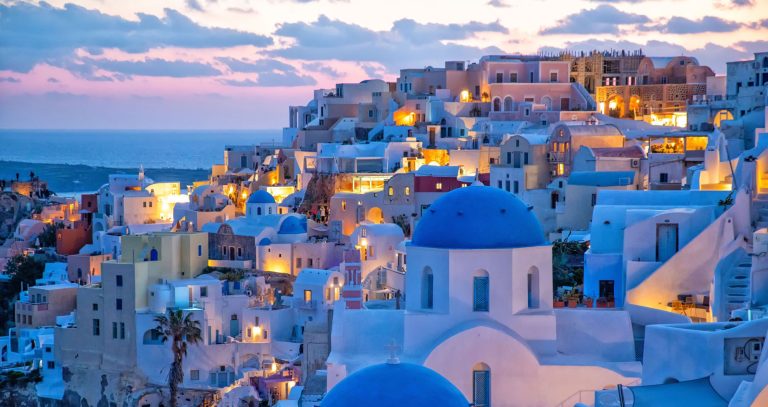
Santorini is well known for its breathtaking crescent-shaped caldera, which is the only sunken caldera in the world and is half submerged.
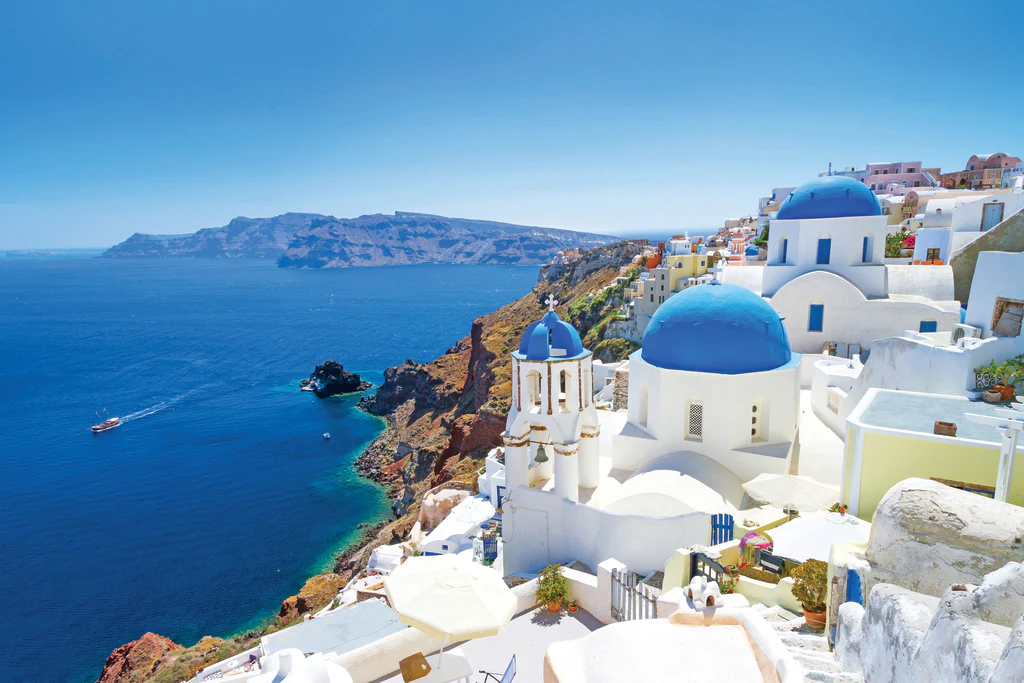 Santorini has always served to itself as a reminder that it is a volcanic island. The lunar sceneries, the crimson and black beaches, and the lava pebbles. The area's dramatic volcanic history is what gave rise to the Greek island's mesmerizing beauty.
Around 3,600 years ago, one of the biggest known eruptions produced it. The ancient Minoan civilisation, which had just arrived on Santorini at the time, was destroyed by the explosion, which was so powerful that it destroyed the island's old city of Akrotiri.
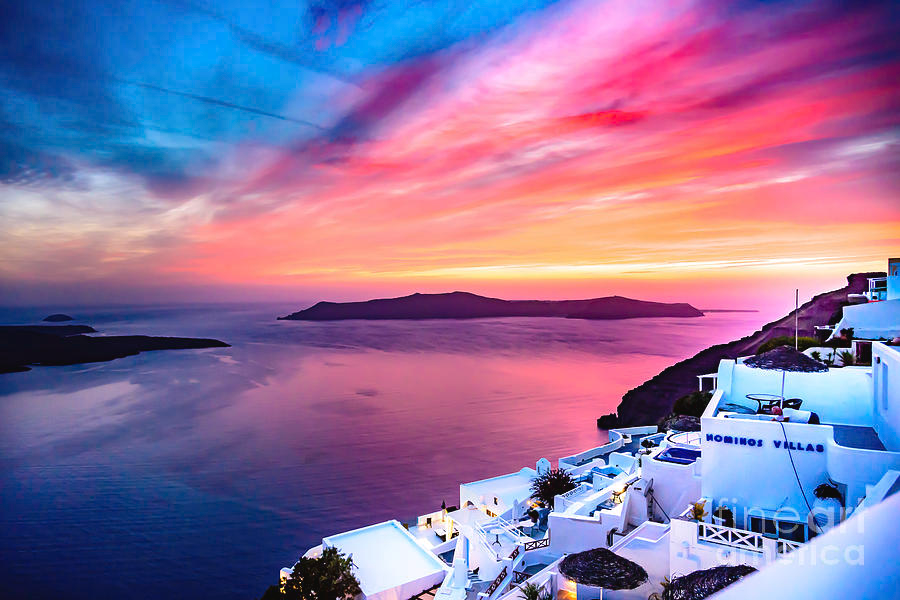 Santorini, also known as Thira, is now Greece's top romantic destination, home to opulent villas and resorts that pamper A-listers and offer picture-perfect backdrops for extravagant weddings and photo shoots. Whitewashed homes balanced on the brink of the island's sheer volcanic cliffs, which rise around 1,000 feet above sea level and provide a spectacular geological canvas. It makes sense why it's one of the world's most popular photo spots.
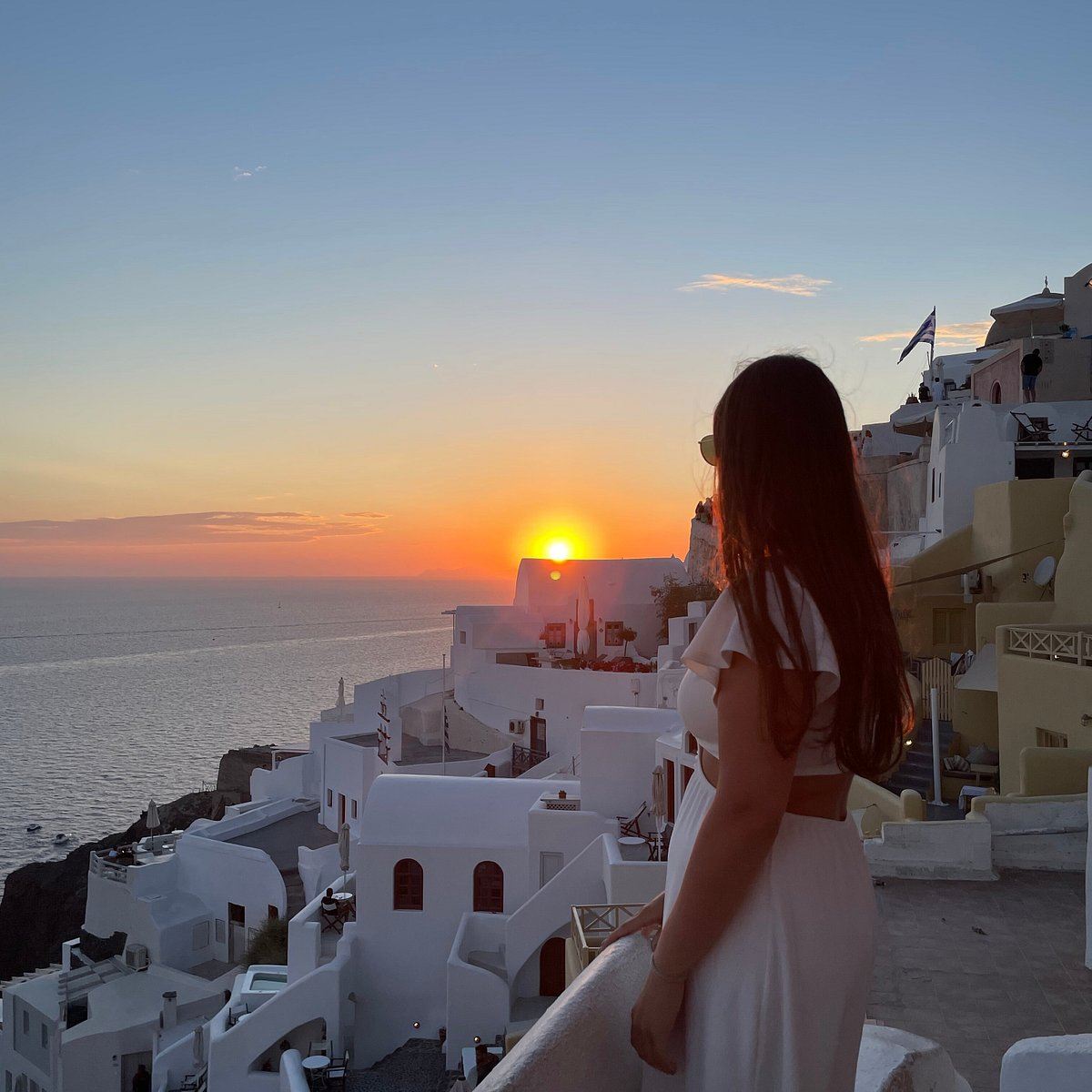
Every evening, the island comes to a complete standstill to watch the renowned sunsets in Santorini. As the golden hour approaches, Oia, a blue and white domed settlement, fills to capacity. The sky becomes a magnificent display of crimson, orange, and pink colours as the sun begins to drop behind the cliffs of the caldera.
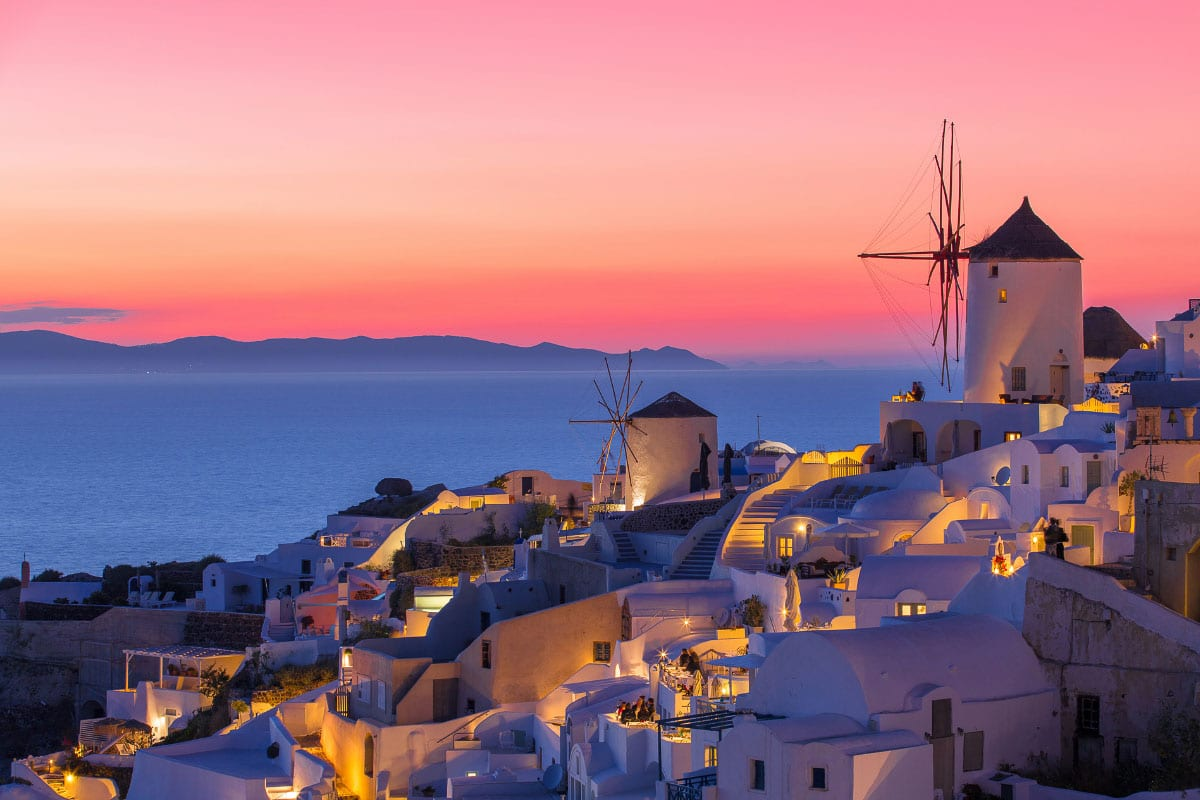
Thousands gasp as the last rays disappear in the sea.
Few realize that beneath the hypnotic kaleidoscope of colors lies an active volcano.
Santorini is part of the Hellenic Volcanic Arc, one of the most important volcanic fields in Europe which has seen over 100 eruptions over the past 400,000 years. The East Mediterranean’s most active underwater, and potentially dangerous, volcano, Kolumbo, is five miles northeast of Santorini and part of the same volcanic system.
 Submerged in the Aegean Sea, Kolumbo has been quiet for nearly 400 years – but it is not asleep. The last time it erupted, in 1650, it killed 70 people and triggered a 40 foot tsunami. Strong earthquakes and aftershocks were recorded, along with toxic gas and plumes of smoke.
The possibility of Kolumbo bursting is known to scientists. It has been visited by some of the largest oceanographic expeditions in the world, and monitoring has expanded over the past 20 years. The JOIDES Resolution deep drilling ship, one of the biggest US research vessels, visited Santorini for its maiden Mediterranean trip between December 2022 and February 2023.
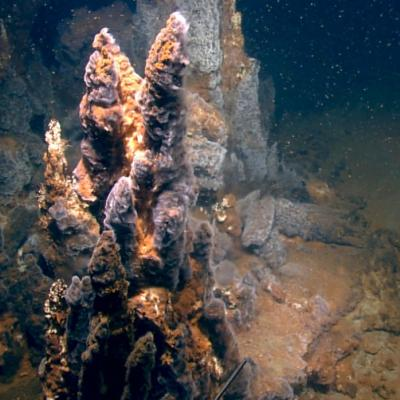 According to volcanologist and expedition co-chief Tim Druitt, the powerful ship brought "an entire floating lab" to the region. Researchers were able to drill more than 8,000 meters (26,000 feet) below the ocean's surface, where they collected previously unreachable sediments in an effort to piece together the region's volcanic past.
[zombify_post]

0 Comments