



















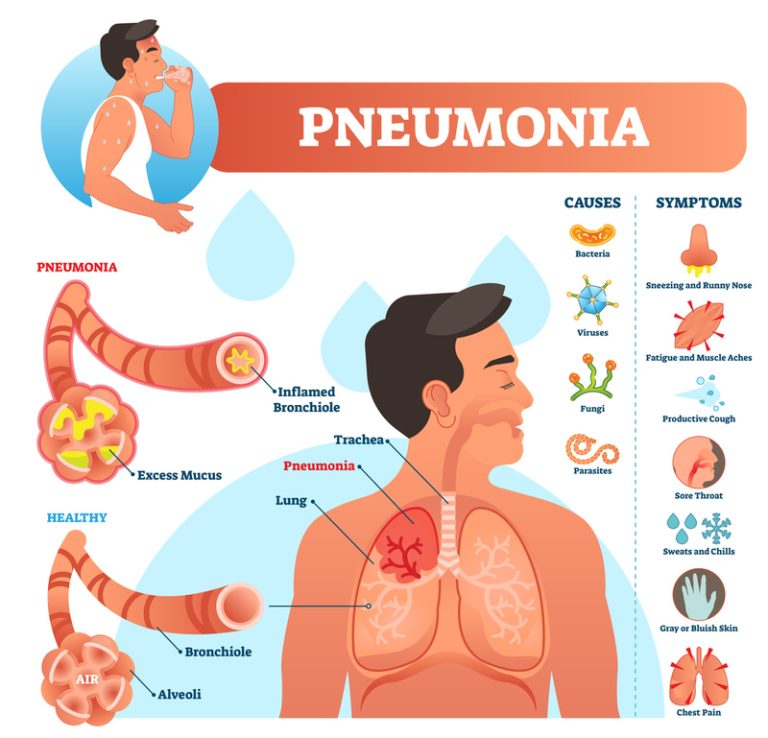
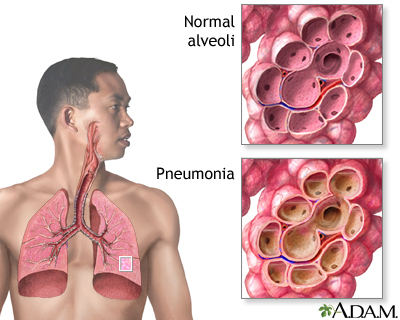
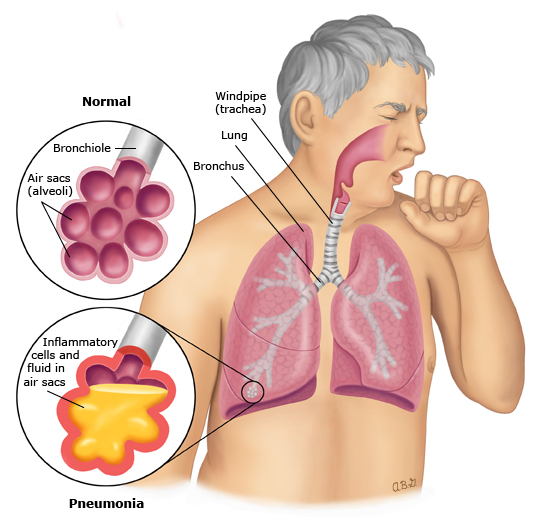
Lung infection is known as pneumonia. Lung air sacs (alveoli) become inflamed as a result of it (irritated and swollen). Pus or fluid may accumulate inside of them. This results in a spectrum of symptoms, from minor to major. The usual causes of pneumonia are viruses or bacteria. Moreover, it could be brought on by irritants or fungi that you breathe into your lungs. Several factors determine how dangerous pneumonia is. They include your age, the kind of the pneumonia, and your general health.
SYMPTOMS
The symptoms of pneumonia can range from mild to severe. This depends on your risk factors and the type of pneumonia you have. Common symptoms are similar to the symptoms caused by a cold or the flu. They include:
- cough
- fever
- bringing up mucus when you cough
- difficulty breathing
- chills
- chest pain
You may also sweat, have a headache, and feel very tired. Some people also experience nausea, vomiting, and diarrhea.
If any of these symptoms are severe, call your family doctor. You should also call your doctor if you suddenly start getting worse after having a cold or the flu.
CAUSES
* They are the most typical cause of adult pneumonia. They can do so either on their own or following a cold or the flu. Often, bacterial pneumonia typically affects a single lung segment.
* Pneumonia can be brought on by any virus that affects the respiratory system. This applies to viruses that cause the flu and the common cold. The respiratory syncytial virus (RSV) is the most frequent cause of illness in children under the age of one. Mild viral pneumonia is typical. In 1 to 3 weeks, it frequently gets better on its own.
* Pneumonia can develop from some fungal infections, especially in persons with compromised immune systems. In various regions of the United States, there are several fungi that grow in the soil that might cause pneumonia.
* Aspiration can also result in pneumonia. This is when you inhale particles into your lungs. They could include vomit, food, saliva, or liquids. Regularly breathing in dust, chemicals, air pollution, or toxic fumes can damage your lungs. This makes your lungs more vulnerable to infection.
DIAGNOSIS
Due to the symptoms being similar to those of a severe cold or the flu, pneumonia can occasionally be difficult to diagnose.
You should visit your doctor if you suspect pneumonia. Based on your medical history and the findings of a physical examination, your doctor might determine that you have pneumonia.
He or she will use a stethoscope to listen to your lungs. Also, your doctor might order additional tests, such a blood test or a chest X-ray. Your doctor can determine whether you have pneumonia and the severity of the infection via a chest X-ray.
Your doctor can determine the cause of your pneumonia using blood and mucus tests to rule out bacterial, viral, or fungal infections.
PREVENTION
You can help prevent pneumonia by doing the following:
- Get the flu vaccine each year. People can develop bacterial pneumonia after a case of the flu. You can reduce this risk by getting the yearly flu shot.
- Get the pneumococcal vaccine. This helps prevent pneumonia caused by pneumococcal bacteria.
- Practice good hygiene. Wash your hands frequently with soap and water or an alcohol-based hand sanitizer.
- Don’t smoke. Smoking damages your lungs and makes it harder for your body to defend itself from germs and disease. If you smoke, talk to your family doctor about quitting as soon as possible.
- Practice a healthy lifestyle. Eat a balanced diet full of fruits and vegetables. Exercise regularly. Get plenty of sleep. These things help your immune system stay strong.
- Avoid sick people. Being around people who are sick increases your risk of catching what they have.
Is there a vaccine for pneumonia?
There isn’t a vaccine for all types of pneumonia, but 2 vaccines are available. These help prevent pneumonia caused by pneumococcal bacteria. The first is recommended for all children younger than 5 years of age. The second is recommended for anyone age 2 or older who is at increased risk for pneumonia. Getting the pneumonia vaccine is especially important if you:
- Are 65 years of age or older.
- Smoke.
- Have certain chronic conditions, such as asthma, lung disease, diabetes, heart disease, sickle cell disease, or cirrhosis.
- Have a weakened immune system because of HIV/AIDS, kidney failure, a damaged or removed spleen, a recent organ transplant, or receiving chemotherapy.
- Have cochlear implants (an electronic device that helps you hear).
The pneumococcal vaccines can’t prevent all cases of pneumonia. But they can make it less likely that people who are at risk will experience the severe, and possibly life-threatening, complications of pneumonia.
[zombify_post]

0 Comments