



















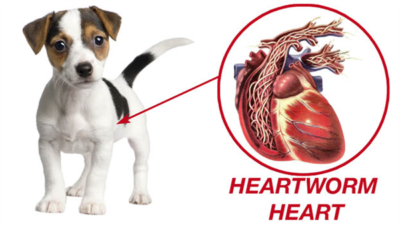
According to the U.S. Food and Drug Administration, preventing a serious and occasionally fatal condition only requires frequent, yearly preventative treatment with a tablet, injection, or topical drug.
Heartworms are parasitic worms with a maximum length of 12 inches. The larvae can spread via the bloodstream to infect the heart and arteries of a pet's lungs and enter the body through mosquito bites.
Although the illness cannot be passed between pets, mosquitoes can still spread it after biting sick animals.
According to the FDA, human heartworms are extremely uncommon.
The early indicators of heartworm disease, such as a moderate cough, a decrease in appetite, and weight loss, are undetectable and difficult to spot. A chronic cough, fatigue after light to moderate activity, breathing difficulties, and decreased appetite are symptoms of later disease. The heart, lungs, liver, and kidneys of the animal can all be harmed by heartworm disease.
Every year, in all 50 states, including those with colder climates, heartworm infections occur.
When mosquitoes start to emerge, pets must have the right amount of heartworm prevention medicine in their blood for it to be effective. Only heartworm larvae are targeted by medications; adults are not.
If you have a dog: Have your dog tested before starting medicine if you have one; this can be done with a straightforward blood test.
Testing is crucial even if your dog has taken heartworm medicine on a regular basis. Because no treatment is 100% effective, it's crucial to ensure that it has been doing its job and that any delays in giving your dog the prescription haven't made it more susceptible to contracting the illness.
You could endanger your dog if you restart the medicine without first checking for heartworms if your dog contracts the infection while off the heartworm preventive medication.
Killing adult heartworms requires using an FDA-approved arsenic-containing drug, a potentially dangerous treatment process.
Indoor pets also need heartworm treatment because mosquitos can find their way inside through open doors and windows.
If you have a cat: Heartworms don’t survive as well in cats as they do in dogs, but cats are still at risk for heartworm disease, according to the FDA. Diagnosing the disease is more challenging. In addition to blood work, testing in cats can include X-rays and ultrasounds.
No FDA-approved treatment for killing adult heartworms exists for cats. This creates additional complications for diagnosing and treating cats, so prevention is important year-round.
If you have a ferret: Testing for heartworms in ferrets is also not as easy, simple or reliable as in dogs. There is no FDA-approved treatment for killing adult heartworms in ferrets either, so prevention is critical.
The FDA advises consulting your veterinarian about the best heartworm prevention medicine for your pet as well as when and how frequently to test your pet for heartworms.
For pets, for instance, who are around young children, topical medicines might not be the greatest option.
Only on prescription are drugs for heartworm prevention. The FDA advised consumers to be wary of websites or physical locations that offer to sell them these drugs without a prescription.
[zombify_post]

0 Comments