



















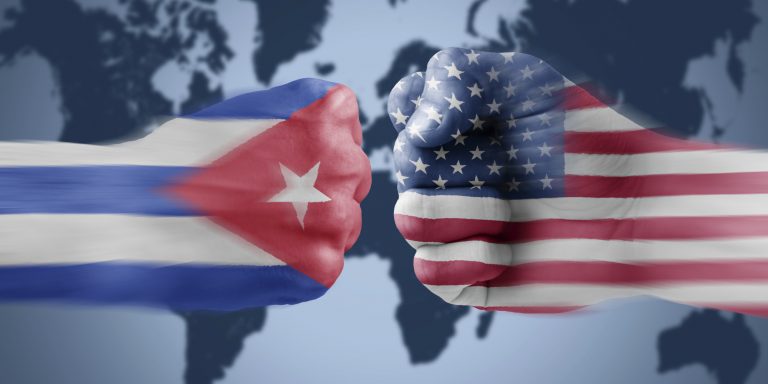
In order to restart negotiations between the two governments over matters of law enforcement, the United States has stated that a delegation will travel there the next week.
Officials will "address subjects of bilateral interest on international law enforcement problems [and] increased international law enforcement collaboration," US State Department spokesperson Vedant Patel told reporters on Friday.
This is a chance for the US to better safeguard its citizens and prosecute international criminals, according to Patel.
The visit is the most recent attempt by US President Joe Biden's administration to normalize relations with the Caribbean country as it deals with a severe economic downturn and unprecedented numbers of people leaving the island.
Since the 1960s, when the Cold War pitted Western democracies against left-leaning regimes backed by the former Soviet Union, relations between the US and Cuba have been tense. In 1959, Cuba's US-supported president Fulgencio Batista was ousted.
During this time, in February 1962, former US President John F. Kennedy imposed a "complete economic embargo" on Cuba, which is still in effect today.
Under Democrat Barack Obama, who made his first visit to Cuba in 88 years as president of the United States, tensions briefly softened. After the embassies of the two nations were restored, Obama delisted Cuba from his list of "state sponsors of terrorism" in 2015.
But Republican President Donald Trump, Obama's successor, reinstated Cuba's travel restrictions and added it back to the list of nations supporting terrorism.
How the Biden administration could "justify" negotiating law enforcement concerns with a nation classified as a "state sponsor of terrorism" was a question reporters probed Patel on during Friday's news conference.
Naturally, there are still issues and concerns about human rights, in response Patel said.However, he emphasized the administration's position that enhancing cooperation would be beneficial in the long run.
In order to properly handle transnational threats, he stated, "our conviction is that building and growing avenues for law enforcement cooperation is not at the price of the severe human rights concerns that we continue to have." And we have included these protections and concerns for human rights into all of our dealings with the Cuban regime.Members of the US departments of state, justice, and homeland security will be included in the Biden administration's delegation of law enforcement officials.
According to a US statement, they intend to talk about topics like drug trafficking, migration, and the release of US prisoners while in Cuba.
The Biden administration also reinstated full visa and consular services in Cuba earlier this month for the first time since 2017, when embassy personnel initially reported a string of unexplained medical occurrences that later came to be known as "Havana syndrome."
When Cuba's government issued an unusual request for aid following Hurricane Ian, a category 3 hurricane that made landfall and completely cut off the island's power, Biden also offered $2 million in aid.
[zombify_post]

0 Comments