



















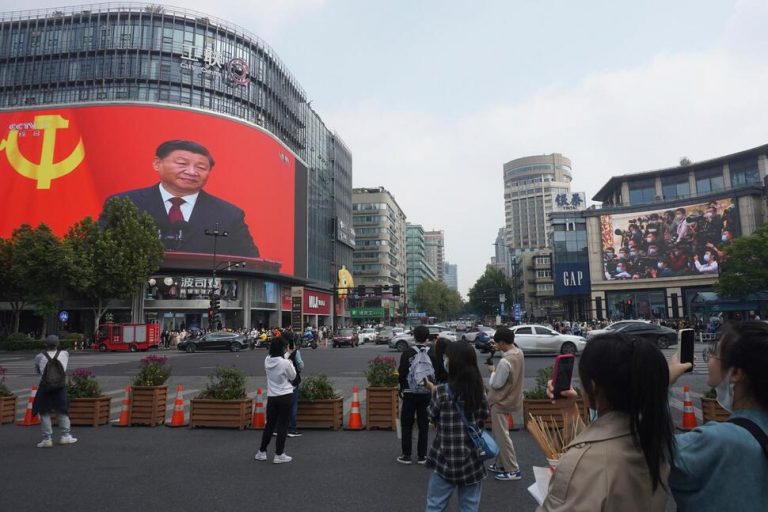
According to official statistics, China's economy recovered more quickly than anticipated in the third quarter. However, Beijing's efforts to promote a strong recovery over the coming year are being hampered by the COVID-19 regulations, a worsening real estate crisis, and the risk of a global recession.
According to official data released on Monday, the world's second-largest economy's gross domestic product (GDP) increased by 3.9 percent in the July-September quarter compared to the same period last year, exceeding the 3.4 percent pace predicted in an analyst poll by Reuters news agency and picking up speed from the 0.4 percent pace in the second quarter.
The data was supposed to be released on October 18, but that date was postponed because of a significant Communist Party Congress that took place last week and saw Xi Jinping elected to a record-breaking third term as its leader.
As he introduced the Communist Party's top leadership team for the upcoming five years, Xi reminded reporters that the Chinese economy had immense resilience, potential, and latitude.
"Over the long term, it will continue on a good track due to its strong fundamentals."The manufacturing industry helped to boost the economy; according to independent figures, industrial output increased by 6.3 percent in September compared to a year earlier, above predictions of a 4.5 percent increase and 4.2 percent in August.
On Monday, investors focused on China's new governing council, which was filled with Xi allies, which raised concerns that he would continue pursuing ideology-driven policies at the expense of economic growth. As a result, Chinese stocks fell and the currency weakened.
Despite the recovery, the economy still faces numerous obstacles both domestically and internationally. The Ukraine crisis and a global downturn brought on by interest rate hikes to combat raging inflation have been made worse by China's zero-COVID plan and conflict in its vital real estate sector.
One of the worst performances in nearly 50 years is predicted by a Reuters poll, which predicts China's GDP would fall to 3.2 percent in 2022, much below the official objective of approximately 5.5 percent.
trade hurt
Exports increased 5.7 percent from a year earlier in September, above estimates but doing so at the weakest rate since April, showing signs of ongoing pressure.Imports barely increased by 0.3 percent, falling short of forecasts for 1.0 percent growth.
The still-fragile domestic demand was highlighted by the retail sales growth of just 2.5%, which fell short of expectations for a 3.3 percent gain and slowed from August's 5.4 percent rate.
The unemployment rate for job seekers between the ages of 16 and 24 was 17.9 percent in September, which is the highest percentage since June for the urban population polled.
More significantly, new home prices declined month over month for the second consecutive month in September, demonstrating the persistent buyer aversion in this economically essential sector as leveraged developers rushed to combine resources and complete projects on schedule.
Even though they have downplayed the significance of meeting the growth target, which was set in March, policymakers have implemented more than 50 economic support measures since late May in an effort to strengthen the economy and reduce job stresses.
Thanks to the central bank's efforts to boost the economy, new bank lending in China nearly doubled from the previous month and significantly above expectations in September.
The overall policy would continue to be supportive, according to Hao Zhou, chief economist of Guotai Junan International.
However, further interest rate decreases are improbable during a time of ferocious rate hikes by global central banks. "In our view, extra policy impetus is required to boost economic recovery."
[zombify_post]

0 Comments