



















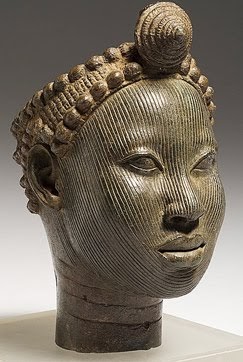
One of the 31 culturally significant items that have been returned to the Nigerian government is a bronze sculpture of a West African king that has been in a Rhode Island museum's collection for more than 70 years.
During a ceremony on Tuesday at the Smithsonian Institution in Washington, DC, a sculpture from the Rhode Island School of Design Museum (RISD) known as the "Head of a King" or "Oba" was among the items donated to the Nigerian National Collections.
When British colonial soldiers pillaged and robbed the Benin kingdom, which is located in present-day Nigeria, in 1897, the Benin Bronzes were taken.
The "Head of an Oba" was taken from Oba Ovonranwmen's Royal Palace in 1897, according to interim director of the RISD Museum Sarah Ganz Blythe.
In order to return this sculpture to the Nigerian people, where it belongs, the RISD Museum collaborated with the Nigerian National Commission for Museums and Monuments, according to Blythe.
29 of the objects that were stolen in the late 19th century, according to officials, will be returned to Nigeria by the Smithsonian Institution's Board of Regents, along with one item from the National Gallery of Art.
Founder and former director of the Smithsonian National Museum of African American History and Culture Lonnie Bunch III stated on Twitter that "today we remedy a historic injustice by returning the Benin Bronzes, exquisite specimens of Benin's culture and history."
"With this repatriation, we recognise a legacy of cultural theft and contribute to bringing back African culture to Africans," the statement reads.Lucy Truman Aldrich gave the "Head of a King" artwork, which is thought to be from the 1700s, to the RISD Museum in 1939. According to a statement from the museum, it was purchased in a 1935 auction of Benin Kingdom artifacts from the Knoedler Gallery in New York.
It appears to have been in a French collection because of a French customs mark inside.
The RISD Museum noted that although though it hasn't been possible to link the item to a specific French or British collection, it is probably certainly one of the looted artifacts.
An oba, or king, of the Edo people of Benin, West Africa, is represented by the bronze head. The statues were erected on ancestral altars in the royal palace, according to the museum, and were commissioned by a new monarch to honor a forerunner.
A global push by cultural organizations to repatriate artifacts taken during colonial wars is what led to the repatriation.Germany and Nigeria inked a contract in August transferring ownership of the Benin Bronzes housed in German museums. The collection, which includes 512 items that arrived in Berlin as a result of the 1897 plunder, has been called the most substantial transfer of museum artifacts from a colonial context to date.
In the same month, the Horniman Museum and Gardens in London declared it would give the Nigerian government a collection of 72 Benin Bronzes.
Abba The National Commission for Institutions and Monuments of Nigeria's Isa Tijani expressed her hope that the most recent transfer will motivate other museums to return African artifacts.In a statement, he said, "We aspire for tremendous relationships with these museums and institutions and we have already began fruitful negotiations with them over this.
"This new way of doing things is open to everyone in the world. a path without rancor and doubts. a path marked by mutual respect
[zombify_post]

0 Comments