



















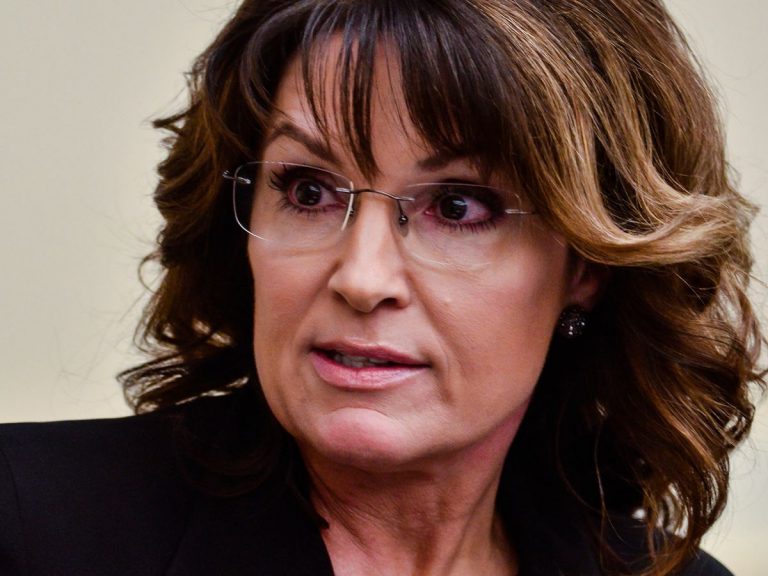
The Democrat Mary Peltola won the special election for Alaska's lone US House seat, dealing a blow to former vice-presidential candidate Sarah Palin's dreams of a political return and giving the Democratic party momentum going into November's midterm elections.A state known for its strong conservative leanings had a dramatic turnaround with Peltola's 51.5% to 48.5% triumph. Don Young, a Republican, held the one House seat for nearly 50 years until his passing in March.
Alaska was won by Donald Trump in the 2020 presidential election by a margin of 10 points. Trump had praised Palin and had campaigned for her at a rally in Anchorage. That results in a 13-point swing to Peltola's three-point advantage.
The vote's results, which were confirmed on Wednesday after being finalized two weeks earlier under a new ranked-choice system, were carefully examined by analysts. It was viewed as an important result on a number of levels, including as a possible retaliation against Palin herself, Trump's continued control over the Republican party, and the recent US Supreme Court decision striking down the constitutional right to an abortion.
The Washington Post noted that since the 1973 Roe v. Wade abortion right was struck down by the Trump-charged Supreme Court in June, Democrats had outperformed predicted 2020 margins in all five special elections. The Alaska outcome demonstrated the largest increase in Democratic support out of the five contests.
Going into the midterm elections, Democratic strategists will try to take advantage of this propensity. Leading Republicans had anticipated that restricting access to abortion would benefit them, but the opposite seems to be happening—a progressive wave, given the enormous national support for the right to end a pregnancy in some situations.
Palin had hoped to utilize the special election as a stepping stone towards a comeback to the national political scene after leaving the governor's office in 2009. The outspoken conservative, who identified as a "mother grizzly" and has been compared to Trump in terms of populism, came to prominence in 2008 when she ran as John McCain's running mate against Joe Biden and Barack Obama.During the special election, she leaned on her notoriety, but there were indications that Alaskan voters were becoming tired of the commotion that frequently engulfs her. For the House seat up for election in the regular election in November, Palin is running once more. It's unclear whether her special election loss will cause her political popularity to dwindle.
Alaskans are aware of Palin's reputation as the last person to ever back down, she said in a statement on Wednesday. I'm about to reload.
However, some Alaskans may recall Palin resigning from her position as governor in 2009 after delivering "an at times rambling address in which she… stated only dead fish move with the flow," according to the Guardian. Critics then accused Palin of making a "flaky" decision and leaving her position.
Following the announcement of her victory on Wednesday, Yup'ik-American Peltola, 49, who will represent Alaska as the state's first female and Native American representative in the House, argued that the outcome was a reflection of voters' desire to return to normalcy following the vitriol of the Trump administration.
She told the Post, "I think it demonstrates that Alaskans are really tired of the squabbling and the personal insults.
Given that ranked-choice voting was used in the state, it is challenging to interpret the results. In the first round, Peltola received 40% of the vote, Palin 31%, and Begich's Republican opponent, 29%.According to Alaska's conservative lean, the first round showed a substantial majority of support for Republican candidates (60 percent total). However, under the new system, Begich was disqualified and Peltola and Palin received Begich's voters' second preferences.
Begich's fans' tastes were startling. Only approximately half chose to support Palin as their second choice. A third or so of voters chose the Democrat, and about as many did not cast a second ballot.
This signal will probably cause Republican leaders who are worried about Trump's impact on the upcoming midterm elections—which will determine which party controls Congress for the following two years—to feel more uneasy.
Numerous Trump-backed Senate candidates are already under a lot of heat, particularly Blake Masters in Arizona, JD Vance in Ohio, and the TV doctor Mehment Oz in Pennsylvania.
[zombify_post]

0 Comments