



















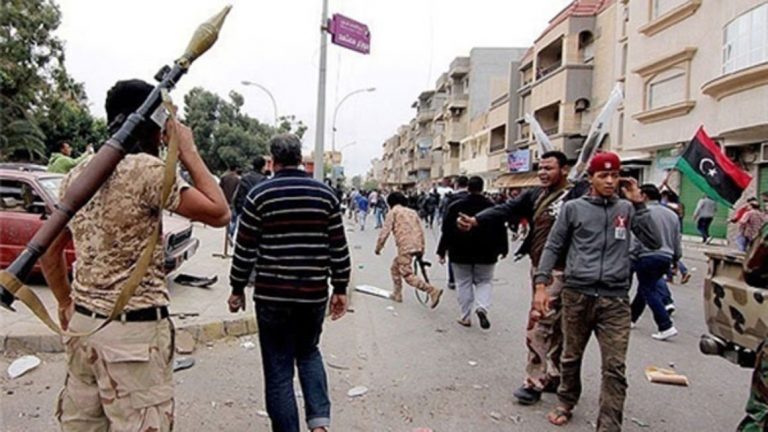
Deadly confrontations between rival Libyan militias broke out in the heart of Tripoli, endangering two years of relative peace as the sound of gunfire reverberated across the densely populated area of the capital city.
The two governments in the east and west of the country of North Africa continue to hold sway over the country, which has resulted in a buildup of rival forces in Tripoli over the past week.After the presidential elections that were supposed to take place in December of last year were permanently postponed, the country's democratic transition was delayed.
"This is awful. The fights prevented my family and I from getting any sleep. A resident of central Tripoli, Abdulmenam Salem, said the sound was "extremely loud and too terrifying." We remained up late in case we needed to depart right away. It's a horrible sensation.
The interior and health ministries did not respond right away when asked about the fighting, which had stopped in the morning before picking back up. Tripoli University announced that it had decided to cancel courses due to the fighting.
Student Ali, 23, who declined to disclose his last name, claimed that throughout the night, when gunfire damaged their building, he and his family evacuated from their flat. We could not continue to stay and remain alive, he said.Prime Minister Abdul Hamid Dbeibah, head of the transitional government based in Tripoli known as the Government of National Unity (GNU), has been called upon to relinquish power. Tensions have increased since Fathi Bashagha, supported by the east-based parliament, was sworn in as prime minister in February.
After the parliament in Tobruk voted to appoint Bashagha as prime minister, the UN expressed alarm.Dbeibah was obligated to cede power in accordance with a UN agreement that was finalized last year after the presidential elections in December. Dbeibah has resisted leaving office and promised to stay in post until elections are held.
According to a GNU statement, Bashagha-aligned gunmen opened fire on a convoy in Tripoli's capital as other pro-Bashagha forces gathered outside the city, sparking the most recent hostilities. It charged Bashagha of abandoning negotiations to end the crisis.The administration of Bashagha claimed in a statement that Dbeibah rejected its offers for discussions but that it never refused talks. It did not immediately address the claim that it was involved in the fights.
Houses and automobiles were reportedly damaged in the fighting between militia members loyal to Haitham al-Tajouri and Abdel-Ghani al-Kikli, according to local media.
According to local media, Osama Ali, a spokesman for Tripoli's ambulance and emergency services, held the parties engaged in the fighting accountable for ensuring the protection of people. He urged all parties to stop their attacks.When asked about the number of wounded civilians, Ali informed Al-Ahrar television that his service was "had mobility issues."
The UN's Libya mission demanded "an immediate cease of hostilities" in response to "ongoing armed conflicts," which it claimed had resulted in hospitals being damaged by "indiscriminate medium and heavy bombardment in civilian-populated neighbourhoods."
The American embassy in Libya expressed "great worry" on the fighting.Things are still tense,
A militia connected to Prime Minister Dbeibah seized a military base owned by another armed organization connected to the Bashagha parallel government, according to Malik Traina of Al Jazeera, who was reporting from Tripoli.
Health experts were unable to enter the regions where the skirmishes took place, so Traina said, "Clashes ensued for several hours and we are hearing that at least two people were murdered and others were hurt, but that figure may climb.""The strained atmosphere persists. The city is filled with the echo of gunfire.According to local media, the coastal road between Al-Khoms and Zlitan was shut down in advance of the deployment of Bashagha-affiliated fighters from Misrata to Tripoli.
16 people, including a toddler, were killed in Tripoli's deadliest confrontations between opposing groups last month, the city's deadliest fighting since 2020.
Oil-rich Since Muammar Gaddafi was overthrown and killed in a NATO-backed rebellion in 2011, Libya has been plagued by violence.
[zombify_post]

0 Comments