



















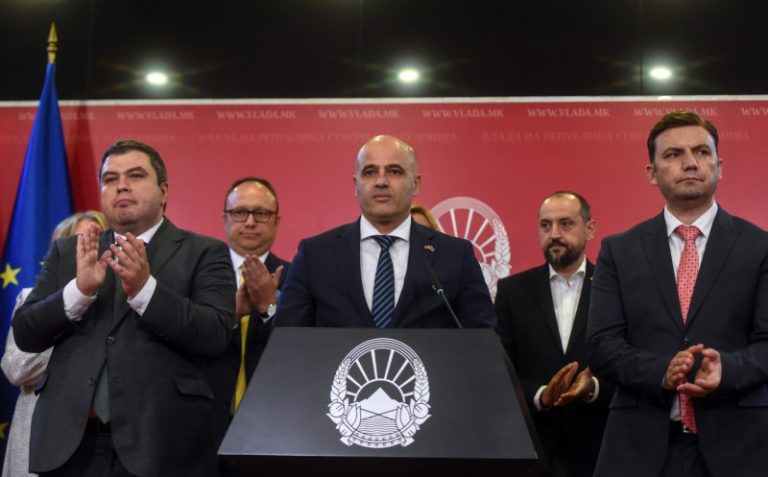
A French-mediated agreement to resolve a dispute with Bulgaria has been approved by North Macedonian lawmakers, paving the door for long-overdue EU membership negotiations.
On Saturday, 68 out of the 120 members of the parliament voted in favor of the deal. Politicians from the opposing party departed the room after the vote without participating.The agreement calls for changing North Macedonia's constitution to recognize a Bulgarian minority while Skopje and Sofia negotiate the remaining concerns. Bulgaria is not required under the proposal to recognize Macedonian as a language.
In return, Bulgaria will permit its neighbor in the West Balkans to begin EU membership negotiations. Following the agreement's passage, representatives from the ruling party unfurled the flags of the EU and North Macedonia.
After a cabinet meeting later on Saturday, Prime Minister Dimitar Kovachevski declared that North Macedonia will begin EU accession negotiations on July 19
"With this, our country has taken another objectively significant historical stride. The Macedonian language and identity are protected under the context of our negotiations, he added.Ursula von der Leyen, the president of the European Commission, and Charles Michel, the leader of the European Council, both congratulated North Macedonia on Twitter.
Writing that it was a "major milestone on your path towards a European future," von der Leyen said, "It was a historic opportunity and you grasped it.""We greet you with open arms and look forward to our future together,"Since the beginning of July, the largest opposition nationalist party coalition, VMRE-DPMNE, has led daily demonstrations against an agreement they claim threatens the Macedonian language and identity.Following the lifting of the Bulgarian parliament's veto on negotiations between the EU and Macedonia last month, there were protests there as well, which aided in the overthrow of the government through a vote of no-confidence.
The start of EU accession negotiations with North Macedonia has been delayed since 2008. First, Greece opposed the nation's admission due to claims to the name "Macedonia," which led to the change in name to "North Macedonia."
Then, in a debate about the history of the two countries' common past, the treatment of Bulgarian minority in North Macedonia, and the origins of the Macedonian language, Bulgaria blocked Skopje's candidacy.
The agreement was crafted by France, which up until last month held the EU Council chair, and Bulgaria endorsed it in June.
However, some liberal detractors and nationalist opposition groups in North Macedonia have expressed concern that the nature of the agreement would still let Bulgaria to block the country's membership in the EU.
This week, Von von Leyen traveled to Skopje to reassure parliamentarians that the pact recognizes Macedonian as a language and that accession talks won't be delayed by bilateral discussions on historical interpretation.
[zombify_post]

0 Comments