



















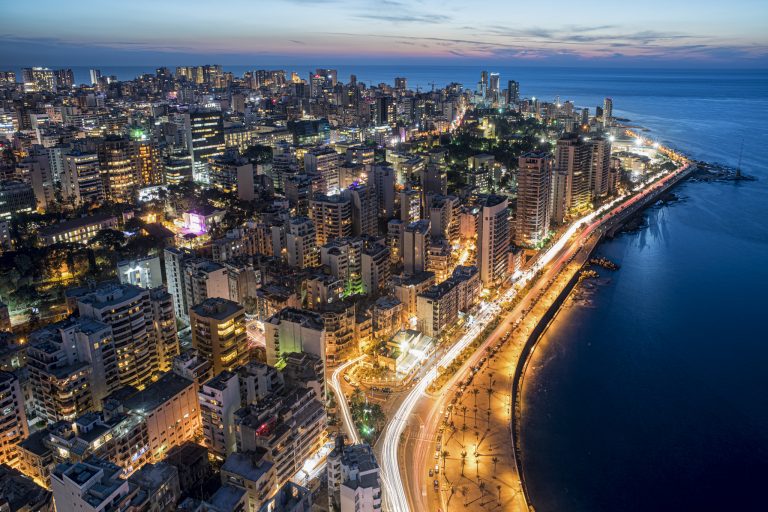
Lebanon's Beirut Since salaries are no longer enough for employees to pay for transportation to work, let alone feed themselves and their families, open-ended strikes have been going on at the majority of Lebanon's government offices since the country's apparent terminal collapse.
According to estimates from the International Labor Organization (ILO) office in Beirut, nearly all civil employees are currently involved in either ongoing or sporadic work stoppages.The seriousness of the issue, which has an impact on everything from courts to schools, was highlighted last week when air traffic controllers at Beirut's international airport said they would stop working nights in August.
The strike has also hampered legal proceedings and delayed the processing of early releases that could have otherwise resulted in shorter jail terms.
Rafik Oreh Ghraizi, a lawyer who represents clients who would be qualified for early release but whose cases have not been processed, claimed that "if a system functioned correctly, I have clients who would be outside today."The primary cause of the issue is Lebanon's currency collapse. A psychologist's assessment of the prisoner is required as part of the early release procedure. At the moment, the government pays these doctors less than $2, therefore nobody goes.The workers are also motivated to strike by the significant devaluation of the Lebanese lira, which since 2019 has caused the minimum salary to drop from $450 to $24 at last week's exchange rate. The government has not yet approved a new budget or any type of pay raises. Basic resources like paper and ink are also in short supply in several ministries.
The system's decline, according to Ghraizi, a founding member of the activist group Reform Lebanon, is becoming more and more obvious.
Three weeks earlier, he remarked, "I was [in a police station], and I heard that some of the people who were arrested sleep while standing in the lavatory because it is so busy."
"The situation in Lebanon is sad. When the last bulwark of the regime and system, the judiciary and security apparatus, is crumbling, the entire society is crumbling," Furthermore, you are unable to see any relief at the other end.While workers express a desire for more pay, it seems that the strikes are upsetting their fellow citizens rather than those in authority, which is the contrary of what they intended.A driving teacher pondered his future while standing outside the nation's main office for vehicle registration and driving permits.When one of his pupils showed up for her exam, she was informed that she may take it the next day when the office momentarily reopened, but it was still unclear when she would actually receive a license.
A real estate agent whose job had also been impacted by his incapacity to register new deeds on the sale of properties, the young woman had come to sit the exam with her father.
Many people's jobs are centered on court cases and the public sector. The land registry and the registry of trade are also affected, which has a negative impact on many people's jobs, according to lawyer and Depositors Union co-founder Fouad Debs.
In order to prevent their own collapse as the value of the currency fell, Lebanese banks frozen people's accounts, and the union has been representing those trying to reclaim lost funds from them.
Debs claimed that the banks had benefited from the work stoppages because it had hampered the litigation he and his colleagues had brought against the institutions.
Debs asserted that the more restrictions there are, the more the wealthy will prevail. And because poverty and inequality are rising, this is terribly unfortunate.The walkout is still being dismissed by those in authority, and to further complicate matters, they have an explanation. Lebanon held elections in May, and it may be weeks or even months before a new administration is sworn in, giving a caretaker administration little power to end the impasse."I understand the employees' actions and the reasons behind their strike, personally. But going on strike also won't make the situation better, so why bother? remarked interim minister of culture Mohamad Wissam Mortada.
The idea behind going on strike, he said, is to eventually produce a result. But for now, no matter what you do, the government lacks the resources to raise salaries over their current levels. Therefore, the strike is just a means for them to express themselves.
This is how Mustapha Said, the senior specialist in workers' activities for the ILO, put it: "It illustrates the fundamental weaknesses in decent work in Lebanon. "Civil servants do not have the fundamental freedoms to organize into unions or to bargain for better working conditions with the government, which is their employer in this situation."
"I think the government will eventually come up with a solution for the civil servants just to give them some hope that they won't be affected by the crisis, but it will be like getting morphine because the whole discussion is about additional assistance instead of addressing the salary scale," Said continued. "The administration should at the very least have completed the nation's budget, which has not been done, before doing that,"
[zombify_post]

0 Comments