



















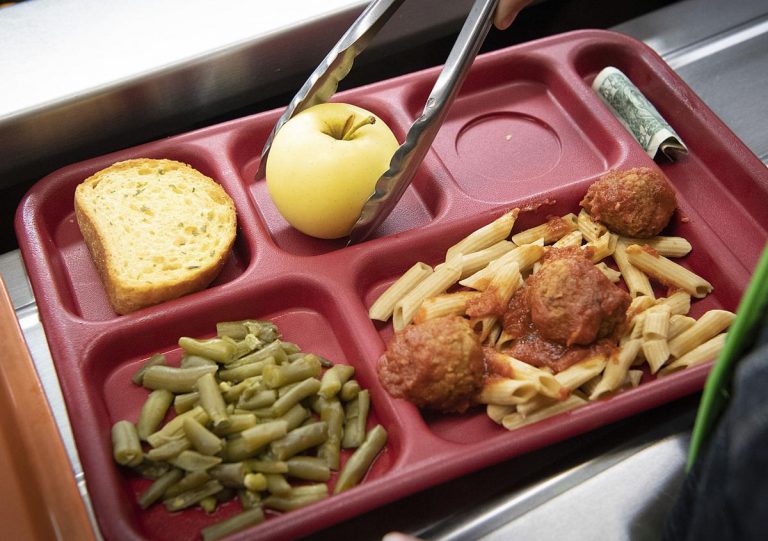
According to anti-hunger advocates, a government waiver that made school breakfasts and lunches free to pupils regardless of their family's poverty is due to expire June 30, ending a benefit that has benefitted millions of schoolchildren at a time when they need it most.
Congress authorized the US Department of Agriculture to provide dozens of child nutrition waivers, including ones that increased summer food programs, to provide a lifeline during the epidemic, which began in March 2020.
If the waivers expire as planned this month, experts predict a crisis as families, already struggling to keep up with rising prices at supermarkets, petrol stations, and elsewhere, lose access to meals that their children have relied on for the past two years.Meanwhile, student cafeterias are already seeing difficulties: supply chain disruptions have driven up the cost of their goods significantly, making it harder for them to meet the USDA's tight meal criteria. The waivers allowed them to deliver nutritious meals with replacements without incurring any penalty."School lunch programs are in the midst of a perfect storm," said Diane Pratt-Heavner, a spokeswoman for the School Nutrition Association, which represents over 50,000 school nutrition employees.
"They're really concerned about financial sustainability," she added, "and they're quite concerned about kids going hungry next year" because universal free meals are being phased out.
Prior to the child nutrition waivers, children from families with incomes of less than 130 percent of the federal poverty level were eligible for free school meals, while those from families with incomes of 130 percent to 185 percent of the federal poverty level were eligible for reduced-price meals through the USDA's National School Lunch Program.
According to Jillien Meier, director of No Kid Hungry partnerships and campaign strategy, around 21 million students got free or reduced-price meals each school day prior to the epidemic. However, before 2020, enrolling pupils might be a hassle, both for parents who had to present proof of eligibility and for schools who had to collect the data, which would be even more difficult now that there are staffing shortages.
Parents have not had to fill out applications for the past two years. And, because every kid at their school was given free breakfast and lunch, Meier said, it helped to remove the stigma that some pupils had previously connected with receiving food.
When schools became remote, the waivers permitted them to provide grab-and-go meals. When the pandemic struck, they are credited with averting what many anticipated would be a catastrophic spike in child hunger.
"We believe that is due to the flexibility that Congress provided," Meier added. "And now they're saying they're not going to renew those waivers."
President Joe Biden is anticipated to extend the USDA's authority to issue waivers for another year. The extension, however, was not included in the omnibus budget bill that Congress passed. According to POLITICO, Senate Minority Leader Mitch McConnell and other Republicans opposed extending financing for school meals because it would cost $11 billion; however, an adviser to McConnell told NBC News that there was never a plan for him to reject.
The USDA pleaded with Congress to extend the deadline.
"Without congressional action, our options for assisting program operators will be significantly hampered. USDA is looking at every tool at its disposal to help school districts cope with the pandemic's impact, but the scale of the problem necessitates congressional action, according to a statement. The department has been able to provide "a few narrow program flexibilities" as schools return to normal operations, but it is evaluating additional options.
How much money have families saved as a result of free meals?
Advocates have long contended that the income threshold for a family to qualify for free or reduced school breakfast and lunch is too narrow, already excluding many low-income families. According to the School Nutrition Association, a family of four would have had to earn $34,450 or less in the 2021-2022 school year to be eligible for free meals, and $49,025 or less to be eligible for reduced-price meals.
The cost of school meals varies across the country, and the most recent USDA data available shows that school breakfast cost an average of $1.48 and school lunch cost an average of $2.57 during the 2016–2017 school year. Breakfast and lunch would cost $8.10 a day for a family with two children, or $1,458 for a 180-day school year — however school meal prices have since risen, so the figure would be higher now.According to Kellie Crawford, who teaches science and library to kindergarten through third graders in Spokane, Washington, the benefits of a universal school food program extend beyond budgetary considerations.Crawford noted that before the epidemic, around 35% of the pupils in her elementary school qualified for free or reduced-price meals. There was a considerable boost in her classes' general focus and energy level when free lunches were made accessible to all students.
"We witnessed how incredible it was," she explained. "It's easier for our school employees to conduct their jobs." Our students are happier and healthier as a result of our efforts."
She also expressed joy that pupils were no longer concerned about their lunch account balance being low or empty.
While some states, such as California, have approved universal free school meal programs, and others have proposed legislation to do so, proponents are hoping that Congress would act.
"Just as students get a free bus trip to school and textbooks to study from, they need a meal in the middle of the day to focus on their studies," Pratt-Heavner explained.
[zombify_post]

0 Comments