



















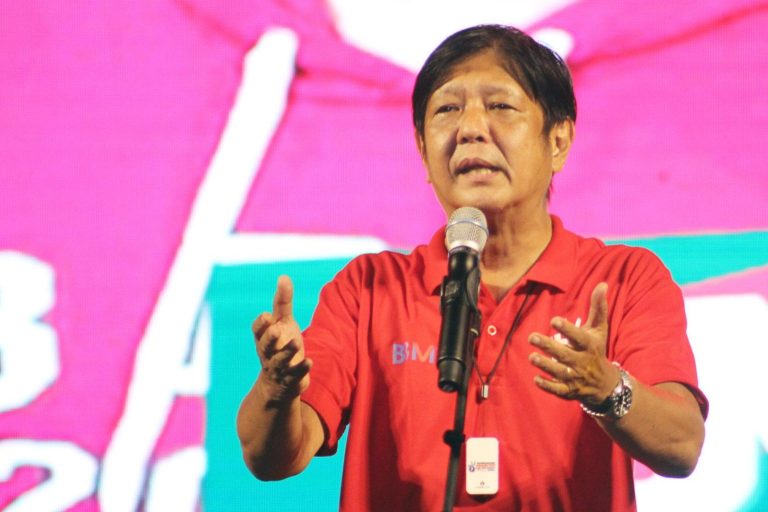
According to preliminary and unofficial results, Ferdinand Marcos Jr, the son of the former Philippine dictator, is on the verge of winning a landslide victory in the Philippine presidential election, bringing the Marcos dynasty one step closer to the Malacaang Palace, 36 years after the family fled a mass uprising.According to a partial and unofficial calculation of the Commission on Elections (Comelec) revealed by CNN affiliate CNN Philippines, Marcos Jr has nearly 30 million votes, while his closest challenger, departing Vice President Leni Robredo, has roughly 14 million votes.
The confirmation of official findings, on the other hand, might take weeks.
Marcos Jr's rise, dubbed "Bongbong" in the Philippines, is the result of a decades-long effort to rebrand the Marcos family's name and image, most recently through social media, according to observers.
Marcos Jr is the son and namesake of former authoritarian leader Ferdinand Marcos Sr, whose 21-year reign was marred by human rights abuses and state-sector looting.
In a speech delivered late Monday, Marcos Jr thanked his followers for their support.
"I can't wait to thank everyone… to those who aided, to those who joined our struggle, to those who sacrificed," he stated, even though the counting hasn't finished yet.Marcos Jr campaigned on a platform of "unity," promising more jobs, lower costs, and increased investment in agriculture and infrastructure. According to political observers, Marcos Jr. appeals to Filipinos who are tired of political wrangling and promises of progress and economic transformation from previous administrations that many believe have failed to benefit ordinary people.
In the run-up to Monday's election, opinion polls showed him winning by more than 30 percentage points.
Sara Duterte Carpio, the daughter of populist outgoing President Rodrigo Duterte, is Marcos Jr's running mate for vice president, and their supporters see them as continuing his infamous "war on drugs."
Duterte Carpio is also leading the contest for vice president, according to partial and unofficial results. In the Philippines, the vice president is chosen separately from the president.
"We are not yet done, we are just getting started," Robredo, who ran on a platform of good governance, transparency, and human rights, told supporters on Monday.
"We launched something that the country had never seen before: a campaign led by individuals," she told CNN Philippines.
Her grassroots campaign was powered by an army of citizen volunteers canvassing votes from door to door, and her rallies regularly drew hundreds of thousands of people.
Former senator Marcos Jr. linked his candidacy to his father's history, with his slogan "rise again" appealing to those who remember Marcos Sr. as the country's golden age.
Supporters of the Marcos family claim that the period was one of growth and prosperity, with major infrastructure including as hospitals, highways, and bridges being built. Critics argue that this was all a ruse, and that the projects were fueled by rampant corruption, foreign funding, and mounting debt.
According to human rights organizations, tens of thousands of people were imprisoned, tortured, or killed during the martial law period, which lasted from 1972 to 1981. The Presidential Commission on Good Governance (PCGG), tasked with collecting the family's ill-gotten money, estimates that around $10 billion was taken from the Filipino people. Hundreds of cases are still open.
The Marcos family has denied abusing martial law and misusing public funds. According to campaigners, the Marcoses were never fully held accountable, and victims of martial regime are still struggling for justice.
Marcos Jr. was 29 years old when his family was exiled to Hawaii following his father's regime's overthrow in 1986. Marcos Sr died in exile three years later, but his family returned in 1991 and became wealthy, powerful politicians, with succeeding members of the Marcos family representing their dynastic bastion of Ilocos Norte.
According to CNN, a Marcos victory exposes "not just Filipinos, but the world, the influence of disinformation on a democracy."
"He will determine not only the country's future but also its past."
Marcos Jr is expected to succeed President Duterte, who is known internationally for cracking down on civil society and the media, as well as waging a violent drug war that has claimed the lives of more than 6,000 people, according to police. Despite his human rights record and the Covid-19 outbreak, which exacerbated the country's starvation situation, Duterte has a significant domestic following.
The election has consequences that extend beyond the country's borders. With China and the United States increasingly using the Indo-Pacific as a staging ground for their global confrontation, the Philippines is set to face more economic and geopolitical pressure, particularly since its territorial claims in the South China Sea coincide with Beijing's.
According to analysts, the Philippines' relations with two major countries could be reset, and the outcome of the referendum could upset Asia's power balance.
[zombify_post]

0 Comments